SpaceX explores merger with Tesla or xAI as Elon Musk weighs empire consolidation
 Nickie Louise
Posted On January 30, 2026
Nickie Louise
Posted On January 30, 2026
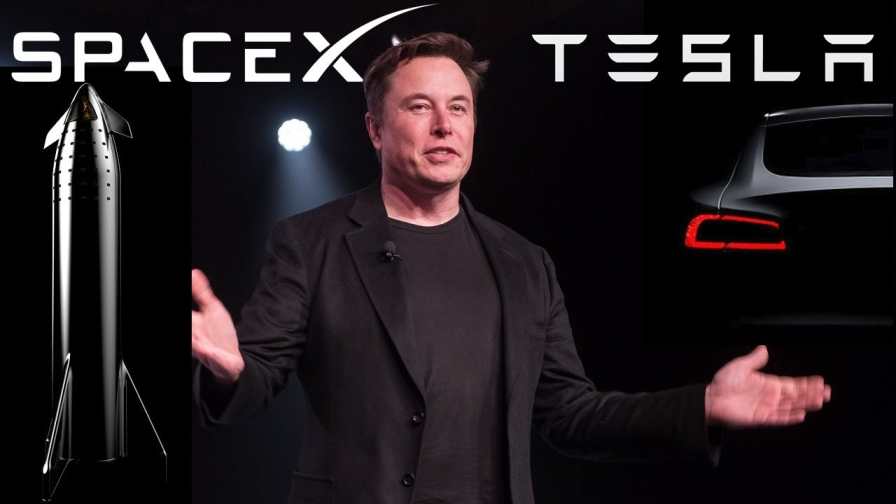
Elon Musk may be preparing his boldest corporate reshuffle yet, and this one could redraw the lines between rockets, electric cars, and artificial intelligence.
SpaceX is quietly weighing deals that would bring one of Musk’s other companies under the same roof, setting off intense debate across Silicon Valley and Wall Street about which combination best fits his long-term ambitions. Two paths are under review: a potential tie-up with Tesla or a merger with artificial intelligence startup xAI.
“SpaceX is considering a potential merger with Tesla Inc., as well as an alternative combination with artificial intelligence firm xAI,” Bloomberg reported, citing people familiar with the matter.
The discussions suggest Musk is testing ways to consolidate parts of his sprawling business portfolio at a moment when AI, autonomy, and space infrastructure are colliding. The reports came the same day CNBC reported that Tesla was investing $2 billion in xAI, even as Grok faces mounting global regulatory scrutiny.
From Rockets to AI: SpaceX Explores Merger With Tesla or xAI
Bloomberg reported that some investors are actively pushing for a SpaceX-Tesla combination, arguing that tighter alignment between the rocket company and the electric vehicle maker could sharpen Musk’s focus and reduce operational sprawl. Separate talks are examining a SpaceX-xAI deal ahead of a planned public offering, according to people familiar with the conversations.
Reuters added new weight to the xAI scenario, reporting that SpaceX is discussing a merger with the AI company ahead of a blockbuster IPO expected later this year. Such a deal would place SpaceX, Starlink, X, and the Grok chatbot inside a single corporate structure, according to a person briefed on the matter and two regulatory filings.
Reuters said it could not determine the valuation, structure, or timing of any transaction. SpaceX is still reviewing a Tesla combination, Bloomberg reported.
“I think it’s highly likely that (xAI) ends up with one of the two parties,” said Tesla shareholder Gene Munster, managing partner at Deepwater Asset Management, an investor in xAI.
Musk sits at the center of all three companies. He serves as CEO of SpaceX and xAI, which controls X. He runs Tesla, The Boring Co, and Neuralink. That concentration of leadership has long fueled concerns among shareholders about bandwidth and governance.
“What’s important for Elon is to have a massive vision that’s way out there that he’s early on,” Munster said. He pointed to Tesla’s acquisition of xAI as a path to advance robotics and self-driving technology within the automaker.
Prediction market Polymarket reflected the uncertainty late Thursday, placing the odds of a SpaceX-xAI merger by mid-year at 48%, compared with 16% for a Tesla-xAI deal.
Musk, SpaceX, xAI, and Tesla declined to comment. Tesla shares climbed 3% in after-hours trading following the reports.
Investors Weigh the Fallout as SpaceX Considers Merger With Tesla or xAI
SpaceX is expected to go public later this year at a valuation that could exceed $1 trillion, according to Reuters and other outlets. A recent private share sale valued the company at roughly $800 billion, making it the world’s most valuable private company. xAI reached a $230 billion valuation in November, according to the Wall Street Journal. Tesla’s market capitalization stands at $1.4 trillion.
Any large merger could complicate SpaceX’s IPO plans. It could strengthen Musk’s push to place data centers in orbit, a project tied closely to his belief that space offers the lowest long-term cost for AI computing. That strategy puts SpaceX in competition with OpenAI, Meta, and Google. Blue Origin has announced its own satellite-based backbone network, and Google continues research under Project Suncatcher.
Speaking last week in Davos, Musk said, “The lowest cost place to put AI will be in space. And that will be true within two years, maybe three at the latest.”
The idea carries real risk. AI development moves at an unpredictable pace, and analysts question whether energy savings offset the expense of building and maintaining hardware beyond Earth.
A merger with xAI could strengthen SpaceX’s position in the defense sector. Caleb Henry of Quilty Analytics said deeper AI integration could improve the company’s chances of securing Pentagon contracts. U.S. Defense Secretary Pete Hegseth recently visited SpaceX’s Starbase facility in Texas and said Grok would be integrated into military networks as part of an “AI acceleration strategy.”
xAI holds a Pentagon contract worth up to $200 million. The company is building a massive AI training system in Memphis known as Colossus. Starlink and its classified sibling Starshield already rely heavily on AI for satellite operations. Starshield is constructing a network of surveillance satellites under a U.S. intelligence contract, with systems expected to track moving targets on Earth.
Shareholders have long urged Musk to simplify his empire. Bloomberg reported that Tesla investors continue to advocate for bringing SpaceX and Tesla closer together.
“Musk has too many separate companies,” said Dennis Dick, chief market strategist at Stock Trader Network. “A major risk thesis for Tesla is that Musk is spreading himself out too much. As a Tesla shareholder, I applaud further consolidation.”
Under a SpaceX-xAI deal, xAI shares would be exchanged for SpaceX stock, according to a person familiar with the talks. Two Nevada entities were created on January 21 to support the process. One lists SpaceX and CFO Bret Johnsen as managing members. The other lists Johnsen as its sole officer.
Johnsen declined to comment. Some xAI executives may receive cash instead of SpaceX equity, the person said. No agreement has been finalized.
This would not be Musk’s first internal merger. Tesla acquired SolarCity in 2016. Last year, Musk folded X into xAI through a share swap that handed the AI startup access to social data and distribution. SpaceX committed $2 billion to xAI during a $5 billion equity raise, according to the Wall Street Journal. This month, xAI closed a $20 billion Series E round at a $230 billion valuation, exceeding its target. Tesla committed roughly $2 billion to the round.
Ross Gerber, CEO of Gerber Kawasaki and an investor in Tesla and xAI, summed up the appeal with blunt honesty.
“It’s like a bunch of overvalued companies merging together into one big overvalued mess run by Elon,” Gerber said. “But it’s a pure play now. It’s like, you want to invest in Elon? Here you go.”
For investors, regulators, and rivals, the question is no longer whether Musk will try to unify his companies. The open question is which combination he believes best fits the future he’s betting on.
Trending Now
Top Tech News Today, March 10, 2026