
Technology News Today – Your Daily Briefing on the AI, Big Tech, and Startup Shifts Reshaping Markets
It’s Wednesday, January 21, 2026, and here are the top tech stories making waves today — from AI and startups to regulation and Big Tech. Today’s tech headlines underscore how deeply AI and infrastructure are reshaping the industry’s power structure. From Nvidia doubling down on the inference economy and OpenAI locking in renewable energy for data centers, to startups racing toward billion-dollar valuations, the focus has shifted from experimentation to execution at scale. Compute, access, energy strategy, and supply-chain resilience are no longer backend concerns — they are now boardroom priorities that define who wins the next phase of AI adoption.
At the same time, regulators and policymakers are moving faster, tightening scrutiny on Big Tech advertising practices, data privacy, and youth protection in AI systems. Cybersecurity risks are also climbing, with breaches hitting global manufacturing partners and exposing sensitive IP. Across the US, Europe, and Asia, today’s stories reveal a common thread: technology’s growth is colliding with politics, energy, and governance — and the companies that adapt fastest will shape what comes next.
Here are the top 15 technology news stories shaping the global ecosystem today.
Technology News Today
Nvidia Backs Baseten in $300M Funding Round as AI Inference Becomes the Next Battleground
Nvidia has joined a new funding round in Baseten, an AI startup focused on running AI models efficiently in production. The investment underscores the rising value of companies focused on “inference” and how it is turning into the center of gravity for real-world AI economics. The investment also signals a shift from the era of training mega-models to the era of serving them at scale, where latency, cost per query, and reliability decide whether AI features actually pencil out for enterprises. Analysts increasingly expect inference workloads to dominate overall AI compute as more products bake in assistants, copilots, and automation across customer support, sales, analytics, and internal ops.
For Nvidia, the move is strategic. The company has benefited enormously from the training boom, but inference is where competition can intensify: alternative accelerators, custom silicon, and cloud-optimized chips can look attractive when the objective is cheaper, always-on model serving. A wave of “model hosting and orchestration” startups is emerging to help companies deploy across clouds, switch hardware vendors, and optimize spend. Baseten’s raise is a reminder that the next phase of AI isn’t just about smarter models; it’s about making them operationally and financially sustainable.
Why It Matters: The AI platform winners of 2026 may be defined by inference economics, not just model quality.
Source: Barron’s.
OpenAI Signs Renewable Energy Deal to Lock In Power for Expanding AI Infrastructure
OpenAI’s push to scale is colliding with a hard constraint: electricity. The company disclosed a renewable energy agreement to secure long-term power as it expands its data center footprint. The deal highlights a reality across the AI stack: compute capacity is now gated by energy availability and grid readiness, not just access to GPUs. Large model providers are increasingly acting like industrial-scale power buyers, negotiating multi-year arrangements that resemble hyperscalers’ playbook.
For the broader ecosystem, this matters because energy procurement is becoming a competitive advantage. When AI leaders can guarantee power and uptime, they can sign bigger enterprise contracts, run more inference, and train larger next-gen systems. Meanwhile, regions with constrained grids may impose new permitting rules, emissions requirements, or infrastructure fees. That can ripple into where startups build, where cloud providers expand, and how quickly new AI services can launch globally.
Why It Matters: AI’s next scaling bottleneck is power, and long-term energy access is turning into a strategic moat.
Source: Reuters.
OpenAI Rolls Out ChatGPT “Age Prediction” as Regulators Push Harder on Teen Safety
OpenAI is deploying an age-prediction system for ChatGPT designed to identify accounts likely belonging to minors and automatically apply tighter safeguards. The system uses a mix of behavioral and account signals to estimate whether a user is under 18, then restricts access to sensitive content. Adults who were incorrectly flagged can regain full access by verifying their age through a selfie-based flow with an identity verification provider. The company said the EU rollout will follow in the coming weeks.
The move lands at a moment when AI chatbots are under rising scrutiny from lawmakers and regulators concerned about self-harm content, sexual material, and other risks for younger users. It also shows how fast consumer AI is adopting “trust and safety” mechanisms that used to be associated with social platforms. OpenAI has framed this as part of a broader roadmap tied to an “adult mode” concept, which would place higher-risk features behind verified access.
Why It Matters: Age-gating is becoming a baseline requirement for consumer AI, shaping product design, compliance costs, and growth.
Source: OpenAI.
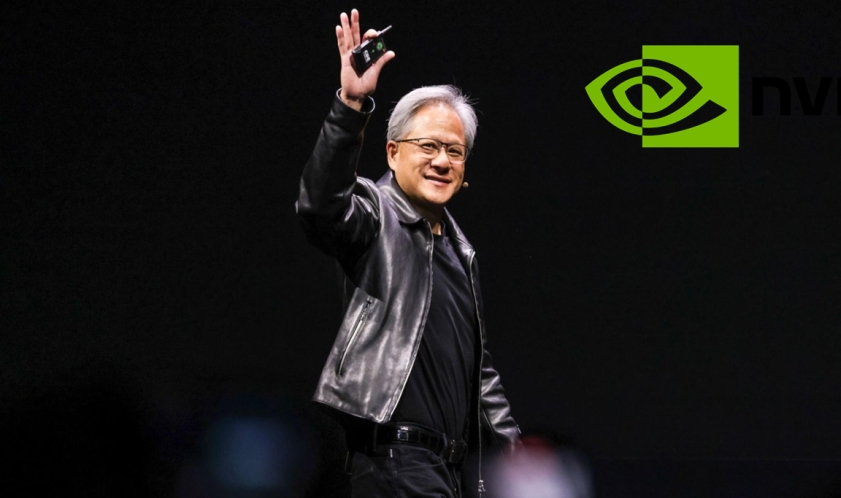
Nvidia CEO Jensen Huang Plans China Visit as AI Chip Access Remains Politically Volatile
Nvidia CEO Jensen Huang is reportedly planning to visit China in late January, as the company tries to stabilize access to one of its most important markets for AI accelerators. The timing underscores how geopolitics continues to influence the AI supply chain. Even when export rules loosen, enforcement, customs decisions, and shifting political pressure can still disrupt shipments and revenue visibility.
For Nvidia, China is both an opportunity and a risk: the market is large, demand is persistent, and local buyers are motivated to secure advanced hardware. But policy constraints can change quickly, creating whiplash for product planning and forecasting. For startups building on Nvidia’s stack, these dynamics matter too. If availability tightens or pricing spikes, it can reshape where AI companies host workloads, how fast they scale, and whether they diversify to alternative chips or clouds.
Why It Matters: AI leadership is increasingly tied to export policy and supply continuity, not just innovation.
Source: The Straits Times.
Applied Compute, founded by Ex-OpenAI Researchers, Talks $1.3B Valuation as “Custom Model” Demand Surges
Applied Compute, a startup founded by former OpenAI researchers, is reportedly in talks that would value it at around $1.3 billion. The company’s pitch centers on helping organizations tailor AI systems using their own data, a segment gaining momentum as enterprises move from experimentation to deployment. Rather than chasing a single general-purpose model, many companies want domain-tuned systems that reflect their proprietary workflows, documents, and customer interactions.
This trend is creating a “second wave” of AI infrastructure startups that sit between foundation models and end-user applications. Their value proposition is pragmatic: reduce hallucinations in narrow contexts, improve reliability, and make AI outputs auditable enough for compliance and regulated industries. If Applied Compute’s talks hold, it’s another signal that investors believe the enterprise AI stack will be built around customization layers and tooling, not just model providers.
Why It Matters: The next enterprise AI winners may be the companies that make customization safe, repeatable, and production-ready.
Source: TechStartups via The Information.
Amazon Signals Openness to AI Shopping Agents After Previously Blocking Them
Amazon is indicating it may open its retail site to AI shopping agents, after previously restricting automated agent access. That’s a meaningful shift because AI agents are quickly becoming a new distribution layer: consumers may soon rely on assistants to compare products, track prices, and even execute purchases across multiple merchants. If Amazon embraces agents, it could reshape how product discovery works and how brands compete for visibility.
For merchants and startups, the implications are significant. Agent-friendly commerce could reward structured product data, transparent pricing, and better fulfillment signals. It could also intensify platform competition as “where the agent shops” becomes the new battleground, similar to how browser defaults and app-store placement shaped earlier eras. At the same time, Amazon will want to manage fraud risk, scraping, and abusive automation. Expect a tug-of-war between openness (to capture the agent economy) and control (to protect marketplace integrity).
Why It Matters: AI agents could rewrite e-commerce discovery, and Amazon’s stance will influence the entire retail internet.
Source: The Information.
Preply Hits Unicorn Status After $150M Raise as AI Reshapes Language Learning
Preply raised $150 million and is now valued at roughly $1.2 billion, a milestone that highlights investor confidence in education marketplaces that can scale globally. The company’s model connects learners with tutors, but the market context is shifting: AI translation and conversational assistants are changing expectations for how quickly users can learn and how personalized instruction can be delivered.
The opportunity is not simply “AI replacing tutors.” In many cases, AI expands the funnel by lowering friction for practice, diagnostics, and scheduling, while human tutors provide feedback, accountability, cultural nuance, and structured progression. For startups in education, Preply’s round signals that investors still back businesses with durable distribution, multi-sided network effects, and global reach—especially when they can integrate AI in ways that improve outcomes without undermining trust.
Why It Matters: Edtech is back in growth mode, where AI complements human expertise instead of trying to eliminate it.
Source: TechCrunch.
AI Startup Merges With Data-Center Operator in $25B Deal as Compute Becomes the New “Oil”
A major AI startup is reportedly merging with a billionaire-backed data center operator in a deal valued at around $25 billion, reflecting a broader market reality: AI companies increasingly need direct control over compute supply. As model usage grows, the economics and reliability of infrastructure become existential, pushing companies toward vertical integration—owning or tightly aligning with data center capacity rather than renting it in a purely transactional way.
This kind of combination can quickly change competitive dynamics. It may allow the AI firm to lock in power, cooling, hardware procurement, and deployment schedules—advantages that are difficult for smaller competitors to match. It can also pressure cloud providers, which must now compete not only on GPUs and networking but on the ability to deliver predictable capacity at scale. For startups, it’s another sign that the AI era rewards capital-intensive strategies, while also creating openings for specialized players in energy optimization, inference efficiency, and tooling that reduces compute waste.
Why It Matters: The AI arms race is pushing companies toward infrastructure ownership, reshaping the cloud and data-center markets.
Source: Forbes.
TSMC Posts Strong Results, Says AI Demand Remains “Endless” as Chip Supply Stays Tight
TSMC reported strong quarterly results and again pointed to sustained AI-driven demand, reinforcing the company’s central role in the global compute boom. As the manufacturing backbone for leading chip designers, TSMC’s outlook is a key signal for the entire AI stack—from hyperscalers planning data center buildouts to startups forecasting GPU availability and pricing.
The implications go beyond revenue. When TSMC capacity is tight, everyone downstream feels it: longer lead times, allocation battles, and strategic prioritization of the highest-margin customers. This pressure also accelerates interest in chiplets, packaging advances, and alternative architectures to improve performance per watt. For policymakers, TSMC’s position remains a geopolitical focal point, as countries push domestic manufacturing incentives and supply chain resilience programs.
Why It Matters: AI’s growth curve still runs through semiconductor manufacturing capacity, and TSMC is the choke point.
Source: Ars Technica.
EU Regulators Intensify Scrutiny of Google’s Ad Tech as the Privacy-Platform Clash Escalates
European regulators are escalating pressure on Google’s advertising technology, pushing deeper into how the company’s tools shape competition, data access, and pricing across the digital ad market. The ad tech stack has become one of the most consequential parts of the internet economy, and regulators increasingly argue that dominant platforms can set the rules in ways that disadvantage publishers, advertisers, and independent intermediaries.
For startups, the stakes are direct. If enforcement leads to structural changes—limits on data sharing, restrictions on certain auction mechanics, or remedies around platform neutrality—it could reshape how ad-funded businesses monetize and how new adtech entrants compete. For publishers, it’s about bargaining power and revenue predictability at a time when traffic sources are shifting, and AI search is changing referral patterns. Expect this fight to spill into broader debates about platform governance, interoperability, and whether Europe will force more separation between a platform’s “marketplace” and its “merchant” roles.
Why It Matters: Ad tech regulation in Europe can reset the economics of online publishing and the competitive landscape for ad tech startups.
Source: Digiday.
Colorado Lawmakers Reintroduce 20-Year Tax Break Proposal for Data Centers as AI Load Surges
Colorado legislators reintroduced a bill that would offer major sales and use tax exemptions for qualified data centers for at least 20 years. The proposal reflects how states are competing to attract AI-era infrastructure, betting that data centers deliver jobs, local investment, and long-term economic spillovers. At the same time, critics often warn that incentives can outpace verified benefits, especially when data centers are capital-intensive but not labor-intensive at scale.
For the tech ecosystem, this is part of a broader pattern: AI growth is pushing compute outward from traditional hubs, and state-level policy is increasingly shaping where infrastructure lands. Incentives can accelerate projects, but they also raise governance questions about grid capacity, water usage, and emissions. As more states compete with tax packages, expect a parallel rise in regulation: stricter siting rules, community benefit requirements, and pressure to fund power upgrades. Data centers are becoming political, not just technical.
Why It Matters: Local policy is now a key lever in the AI infrastructure race, influencing where compute can scale next.
Source: Colorado Newsline.
Luxshare Supplier Breach Allegedly Exposes Sensitive Designs, Raising Supply-Chain Cyber Risk for Big Tech
A ransomware group has claimed it compromised Luxshare, a major electronics manufacturer tied to high-profile supply chains, and has alleged the theft of confidential product files and employee data. If confirmed, the fallout could extend beyond one company: supply-chain breaches can reveal design details, manufacturing timelines, and internal documentation that rivals or criminals can exploit.
For Big Tech, supplier risk is increasingly a weak link. Even when a platform invests heavily in security, vendors and manufacturing partners can become entry points for extortion, IP theft, or targeted phishing. For startups, the lesson is sobering: as soon as you plug into enterprise ecosystems, you inherit the supplier security expectations of those ecosystems. This will likely drive more demand for vendor-risk tooling, secure file collaboration, and zero-trust approaches that limit what partners can access—and what attackers can steal.
Why It Matters: The next wave of cyber incidents may hit global supply chains hardest, exposing IP and product roadmaps.
Source: TechRadar.
AI Super PACs Move Early to Shape US Midterms, Highlighting a New Front in Tech Policy Power
Political groups aligned with AI industry interests are mobilizing early for the US midterms, reflecting how quickly AI regulation has become a top-tier policy battlefield. As lawmakers debate safety standards, liability, transparency rules, and competition policy, political spending is increasingly focused on framing AI as a national competitiveness issue—and resisting proposals seen as restrictive.
For the tech sector, the significance is that AI policy is no longer a niche topic handled quietly by committees. It’s entering the mainstream of campaign strategy, with real implications for how companies build and deploy systems. Startups could see both upside and risk: clearer national rules might reduce compliance ambiguity, but aggressive regulation could raise barriers to entry. Meanwhile, public trust will become central; the more AI becomes politicized, the more scrutiny companies face on safety, bias, and real-world harm.
Why It Matters: AI policy outcomes may be shaped as much by political spending as by technical arguments.
Source: WIRED.
Data Center Emissions Forecast Sparks Debate Over AI’s Climate Cost and Grid Strategy
A new analysis highlighted how surging data center demand could drive higher power-plant emissions over the next decade if grids lean on fossil generation to meet load growth. The core point is structural: AI is increasing electricity demand in concentrated regions, and the environmental outcome depends on how fast renewables, transmission upgrades, and firm clean power can scale alongside new compute.
For the AI industry, this is becoming a governance and licensing issue. Communities and regulators are more likely to challenge projects that stress local grids or raise prices. Companies are responding with direct renewable procurement, power purchase agreements, and new interest in onsite generation, small modular reactors, and advanced storage. For startups, the opportunity is huge: software to optimize energy usage, cooling, workload scheduling tied to carbon intensity, and hardware that improves performance per watt can become essential infrastructure.
Why It Matters: AI’s growth will increasingly be judged by energy strategy, not just model capability.
Source: WIRED.
OpenAI Publishes Detailed Approach to Age Prediction as Industry Shifts Toward “Verified Access” AI
Alongside its rollout, OpenAI published a breakdown of its approach to age prediction, framing the effort as part of a broader teen safety strategy across consumer plans. The key signal is that consumer AI is moving toward tiered access: different capabilities and content boundaries depending on whether a user is likely underage, an adult user, or a verified adult. That model mirrors patterns from social platforms, but it’s arriving in AI with higher stakes because conversational systems can generate sensitive, personalized content on demand.
For builders, this points to a near-future norm: identity and safety layers will sit closer to the model. Product teams will need to design for false positives, appeals, verification UX, and privacy risks that come with collecting any biometric or identity signals. Regulators will likely demand transparency about how classification works and how mistakes are handled. The companies that get this right may earn trust and distribution; those that get it wrong may face enforcement actions, lawsuits, and reputational damage.
Why It Matters: “Verified access” is emerging as a foundational design pattern for consumer AI, with major compliance and UX implications.
Source: OpenAI.
Wrap Up
Today’s developments make one thing clear: the future of tech is being shaped as much by infrastructure, energy, and regulation as by innovation itself. From AI compute battles and data center expansion to tighter policy oversight and rising cybersecurity risks, the industry is entering a more complex, high-stakes phase. The companies that can balance scale, trust, and resilience will define the next chapter of global technology.
That’s your global tech briefing for today. Follow on X @TheTechStartups for more real-time insights.
Trending Now

Top Tech News Today, March 23, 2026