Elon Musk seeks $134 billion from OpenAI and Microsoft in explosive lawsuit, claims he built OpenAI from scratch
 Daniel Levi
Posted On January 20, 2026
Daniel Levi
Posted On January 20, 2026
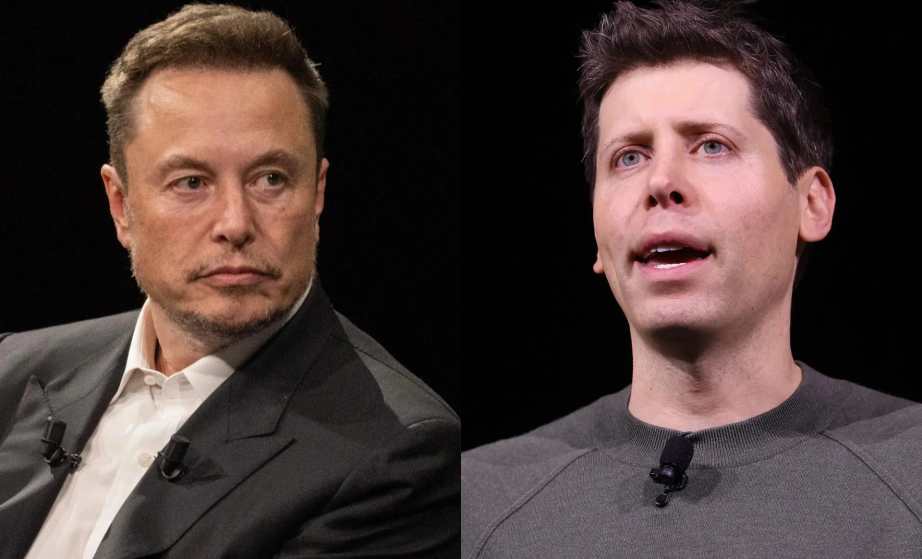
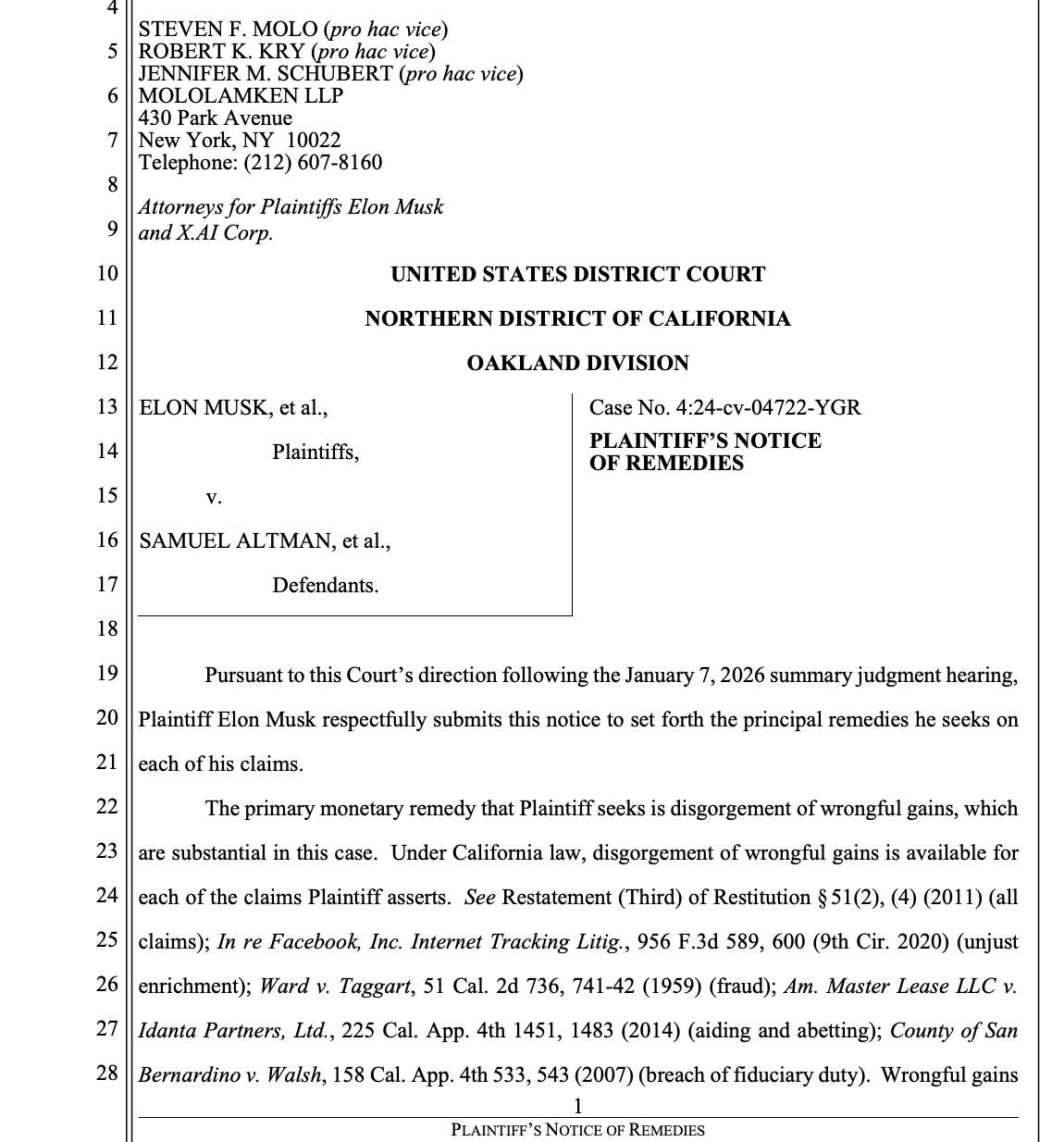
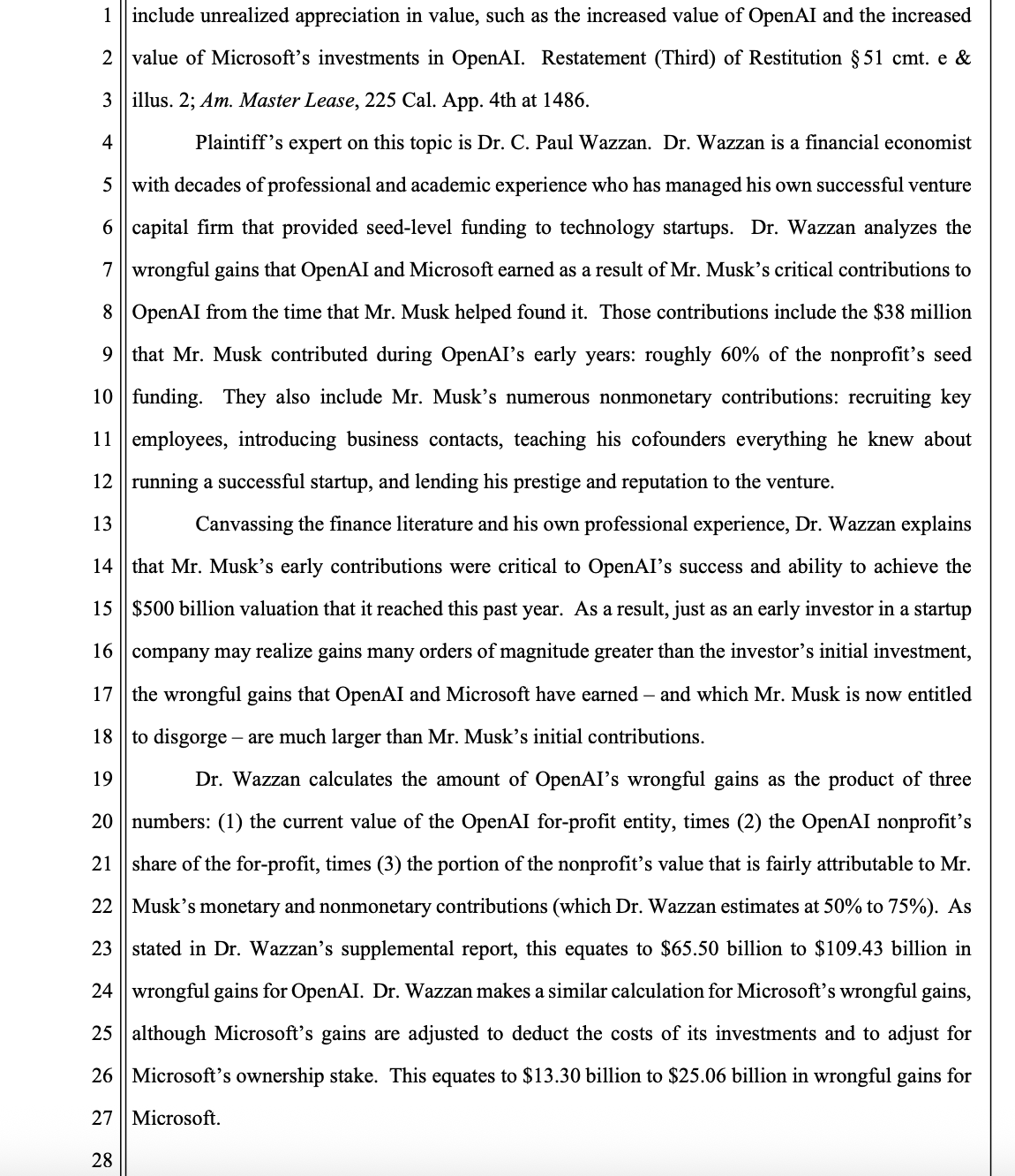
Elon Musk just turned up the heat in his legal war with OpenAI and Microsoft. In a court filing Friday, the billionaire said he wants between $79 billion and $134 billion in damages, arguing he is entitled to the “wrongful gains” the companies earned after abandoning OpenAI’s nonprofit roots.
The move comes after several failed attempts by Musk to buy OpenAI, adding another layer of tension to an already bitter dispute.
Musk claims his early backing helped turn OpenAI from a scrappy research lab into one of the most powerful forces in artificial intelligence. His lawyers say the numbers are no guesswork. According to the filing, OpenAI gained between $65.5 billion and $109.4 billion from Musk’s early involvement, while Microsoft pocketed another $13.3 billion to $25.1 billion from the partnership that followed.
“Without Elon Musk, there’d be no OpenAI. He provided the bulk of the seed funding, lent his reputation, and taught them all he knows about scaling a business. A pre-eminent expert quantified the value of that,” said Musk’s lead trial lawyer Steven Molo in a statement to Reuters.
OpenAI wasted no time firing back. The company called Musk’s demand “unserious” and described the lawsuit as part of what it says is a “harassment campaign.” Microsoft stayed quiet outside business hours and declined to comment on the dollar figures Musk is seeking.
“Without Me, There Is No OpenAI”: Elon Musk Targets Microsoft and OpenAI in Massive Legal Battle
The legal fight is heading to a jury. A judge in Oakland, California, ruled earlier this month that the case will go to trial, with proceedings expected to begin in April. Musk left OpenAI in 2018 and now runs rival AI company xAI, which powers the Grok chatbot. His lawsuit claims OpenAI violated its founding mission when it restructured into a for-profit entity and aligned closely with Microsoft.
According to the filing, Musk put in about $38 million, roughly 60% of OpenAI’s early seed funding. He says he helped recruit key staff, connected the founders with influential contacts, and lent credibility at a time when few people took AI startups seriously.
“Just as an early investor in a startup company may realize gains many orders of magnitude greater than the investor’s initial investment, the wrongful gains that OpenAI and Microsoft have earned — and which Mr. Musk is now entitled to disgorge — are much larger than Mr. Musk’s initial contributions,” Musk argues in the filing.
His damages calculation is based on the expert witness, C. Paul Wazzan, a financial economist hired by Musk’s legal team. The filing suggests Musk may also pursue punitive damages and other penalties, possibly including an injunction, if a jury sides with him. The court papers stop short of spelling out what such an injunction might look like.
OpenAI and Microsoft are pushing back hard. In their own filing, the companies asked the judge to limit what Wazzan can present to jurors, calling his analysis “made up,” “unverifiable,” and “unprecedented.” They say the request amounts to an “implausible” attempt to move billions of dollars from a nonprofit to a former donor who now runs a competing AI company.
They also dispute Musk’s numbers across the board, warning that the valuation methodology could mislead the jury.
What started as a philosophical split over OpenAI’s mission has turned into one of the biggest legal showdowns in tech. Musk says he built the foundation. OpenAI says he’s rewriting history. Now a jury will decide how much that early support was really worth — and whether it justifies a nine-figure payday.
Trending Now
Top Tech News Today, March 25, 2026