Applied Compute, AI startup founded by ex-OpenAI researchers, in talks to raise funds at $1.3B valuation just months after $500M round
 Nickie Louise
Posted On January 20, 2026
Nickie Louise
Posted On January 20, 2026
Everyone is chasing the next breakout AI company. Applied Compute is suddenly at the center of that hunt.
The enterprise-focused AI startup, founded by three former OpenAI researchers, is in early talks to raise a new funding round that could value it at $1.3 billion. That’s a sharp jump from the roughly $500 million valuation discussed back in September, according to an exclusive report from The Information. Sources say the round could reach up to $70 million, with Kleiner Perkins positioned to lead, though nothing is finalized.
“Applied Compute, a startup founded by three former OpenAI researchers that helps companies customize models with their own data, is in talks to raise new funding at a $1.3 billion valuation, including the investment, according to four people with knowledge of the discussions. The funding would more than double the company’s valuation from its last round announced less than three months ago, which valued it at about $500 million,” The Information reported.
‘OpenAI Mafia’ Startup Applied Compute Seeks Unicorn Funding at $1.3B
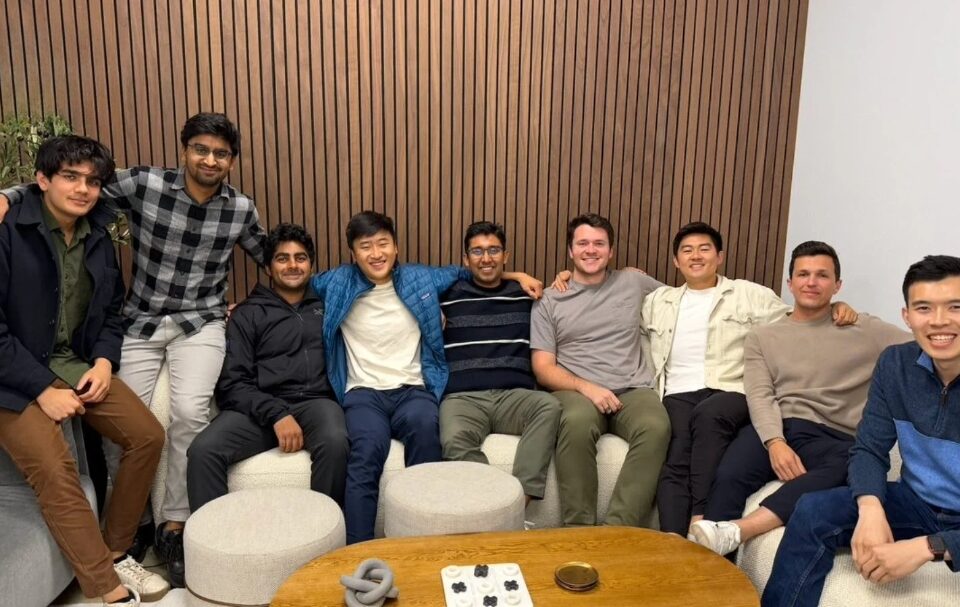
For a company that launched less than a year ago, the pace is striking. Applied Compute was founded in May 2025 by Rhythm Garg, Linden Li, and Yash Patil, all alumni of OpenAI’s technical teams. Their backgrounds read like a résumé for the current AI moment.
Garg worked as a core contributor on OpenAI’s o1 reasoning model, which uses reinforcement learning to push deeper reasoning tasks. Patil helped build agentic software systems, including work tied to Codex. Li focused on machine learning infrastructure and reinforcement learning training systems. Together, they built Applied Compute around a clear idea: companies don’t need generic AI. They need intelligence trained on their own data, tailored to their workflows.
The startup embeds engineers directly with enterprise teams, helping them fine-tune models and deploy autonomous AI agents trained on proprietary datasets. The goal is to create digital workers that handle specific tasks inside companies, from internal operations to customer-facing roles. Applied Compute calls this “Specific Intelligence,” a bet that specialization beats one-size-fits-all AI.
Investors seem to agree. The company quietly raised about $20 million in a pre-launch round in mid-2025, led by Benchmark, valuing it at $100 million. By late 2025, reports said it had secured roughly $80 million total from firms including Sequoia Capital, Lux Capital, and Benchmark. Clients already include DoorDash, Mercor, and Cognition, the company behind the AI engineer Devin.
Now, less than three months after funding talks pegged Applied Compute at $500 million, the startup may more than double that figure. The surge reflects investor appetite for companies tied to the so-called “OpenAI Mafia,” a growing group of alumni spinning out their own ventures.
Kleiner Perkins’ involvement adds another signal. The firm has been active in AI, backing companies across healthcare and enterprise software. Its participation would place Applied Compute in a long line of infrastructure-focused bets.
“New investor Kleiner Perkins is in talks to lead the round, the people said. The talks are early and terms could change. The round could amount to as much as $70 million, according to one of the people. The company has previously raised $80 million from investors including Sequoia Capital, Benchmark and Lux Capital.”
Public details on revenue or deeper client traction remain limited. The company’s site focuses on private AI agents built for internal teams, though it doesn’t disclose pricing or deal sizes. The current talks are preliminary, and terms could shift.
Applied Compute’s rise fits into a broader wave of massive AI funding rounds rolling through late 2025 and early 2026. Former OpenAI engineers are attracting premium valuations at a speed rarely seen outside crypto booms or social media breakouts.
If this round closes at or near the reported terms, it would mark another milestone in how quickly enterprise AI startups can scale. For Applied Compute, the jump from stealth mode to unicorn territory is happening in record time.
Trending Now

Top Tech News Today, May 5, 2026