From Green Beret to CEO: How Gene Yu built a $21M cybersecurity startup after losing his identity
 Nickie Louise
Posted On January 15, 2026
Nickie Louise
Posted On January 15, 2026
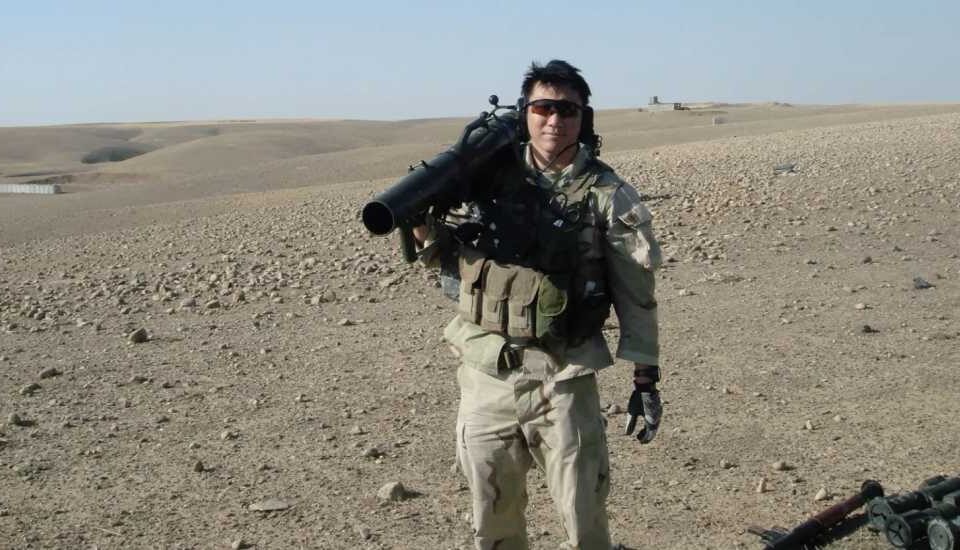
What happens when your entire identity disappears overnight? For many military veterans, leaving the service can mean losing more than a uniform. It can mean losing structure, purpose, and the tight-knit community that once shaped everyday life.
The transition can also stir up depression, isolation, and survivor’s guilt. Gene Yu knows that spiral firsthand. After serving as a Green Beret in U.S. Army Special Forces, he stepped away from the battlefield and found himself facing a harder internal fight.
By the time Gene Yu turned 46, he had already lived through chapters most people only encounter in movies. He had competed as a Division I tennis player, graduated from West Point with a computer science degree, served as a Green Beret in U.S. Army Special Forces, led counter-terror missions, authored a book, and helped rescue a family friend taken hostage by terrorists. Today, he leads Blackpanda, a cybersecurity startup operating across Asia that has raised more than $21 million.
Yet for all the battlefield experience and professional wins, Yu says the hardest fight was never physical. It was the quiet one inside himself.
Yu grew up in Concord, Massachusetts, where he was the only Asian child in his town. At age 10, his family relocated to Cupertino, California, but the sense of being different followed him. He says the messages were rarely spoken out loud, yet always present. You are inferior. You are unattractive. You are not wanted. You are not equal. Over time, those signals shaped how he saw himself. They chipped away at his confidence, planting doubts that followed him into adulthood.
At home, pressure arrived in another form: performance. Yu learned early that achievement carried emotional weight.
“In Asian culture, what we learn is performance equals love, right? Or even better yet, lack of performance equals the absence of love,” he told CNBC Make It. Success became a shield. A way to protect the younger version of himself that felt unwanted. “It’s like you are a wounded child, and you’re wearing the Iron Man suit,” he said. “You’re armoring yourself as a traumatized person.”
By 17, he left home and headed straight to West Point. The structure gave him what he craved: a clean identity. Discipline. A system where effort had clear rewards. Life there was unforgiving. Days started before sunrise and stretched past midnight. Six days a week. No summer breaks. He worked 16 to 20 hours a day for years, a pace that carved his work ethic into muscle memory.
After graduation, he joined Special Forces. He became a captain. A commander. Someone his peers looked up to. In combat zones, he found clarity. Missions had purpose. Decisions had stakes. For the first time, he felt useful in a way that went beyond personal validation.
From Battlefield to Boardroom: How Gene Yu Turned Combat Experience Into a Cybersecurity Startup
Then, in 2009, his world shifted. His uncle, Ma Ying-jeou, became Taiwan’s president. That connection raised internal questions inside the U.S. military. Yu soon found himself under scrutiny.
“There was an investigation around the fact that my uncle was the sitting president of Taiwan,” he said.
Not long after, he left the Army.
The exit felt like exile.
“I had a massive loss of identity,” he said. “I had waves of deep survivor’s guilt.”
His teammates were still deployed.
“I was in my prime as one of the best Special Forces captains the U.S. Army had, and our boys were overseas, dying and fighting, and I was just chilling out.”
The uniform had defined him. Without it, he felt hollow.
Yu tried to rebuild. He studied Chinese. Went back to school at Johns Hopkins. Took a job trading equities at Credit Suisse. The money helped, but the work felt empty. In 2012, he joined Palantir and finally felt alive again. Then, a year later, he was laid off.
“After Palantir let me go, that was the hardest time in my life,” he said. “I was broke. Couch surfing.”
His identity collapsed again. This time without rank, paycheck, or structure.
Then a call came.
In 2013, a family friend named Evelyn Chang had been taken hostage by Abu Sayyaf in the Philippines. Yu dropped everything. He built a team. Flew out. Coordinated efforts on the ground. After 35 days, she was rescued.
The mission changed him.
Not because of the danger — he was used to that — but because of what he noticed afterward.
In kidnapping cases, families rely on insurance. Negotiators. Response teams. A full support system built for a crisis.
Cyberattacks were similar, yet companies were left to figure it out for themselves.
“So the same models that are used in the physical safety and security world need to be copied in the digital world,” Yu said. “That’s what’s missing in cybersecurity.”
That insight became Blackpanda.
Yu teamed up with former Green Berets and security experts to build a cyber emergency response firm. The idea was simple: when a company is hit, someone should pick up the phone. Immediately. Day or night.
Blackpanda’s IR-1 product covers the full cycle of an attack. Preparation. Incident response. Financial recovery through insurance. Businesses pay a fixed subscription, so they are not scrambling when ransomware hits.
Inside Gene Yu’s Rise: The Special Forces Veteran Behind a $21M Cybersecurity Startup
By September 2024, Blackpanda raised $6.7 million in strategic funding co-led by Singtel Innov8 and Gaw Capital, with WI Harper Group participating. That round pushed the company’s Series A total to $21.7 million.
At the same time, Blackpanda integrated its underwriting arm backed by Chaucer of Lloyd’s of London. That move turned the company into a single platform handling prevention, response, and insurance.
“Cyber attacks are an existential threat to businesses, yet most lack access to affordable emergency response services,” Yu said. “Our IR-1 solution provides price-optimized, end-to-end cyber emergency response for a fixed-cost subscription.”
The traction speaks for itself. In Hong Kong alone, Blackpanda saw 140% year-over-year revenue growth in the first half of 2024. Telecom giants like Singtel, CTM, and Macroview now distribute their services across Asia.
For Yu, the success feels surreal.
Years of achievement never healed the original wounds.
“Attaching identity to accomplishments is a rigged game,” he said. “You think the next win will fix everything. But if you never heal the original trauma, anyone can still hurt you from a different angle.”
Today, he leads a company built for crisis.
Yet his personal work looks different.
Learning to stop running.
Learning to exist without armor.
Learning that survival does not always require another mission.
Trending Now
Top Tech News Today, March 25, 2026