Cast AI hits $1B valuation, launches OMNI Compute to unlock multi-cloud GPU access
 Nickie Louise
Posted On January 12, 2026
Nickie Louise
Posted On January 12, 2026
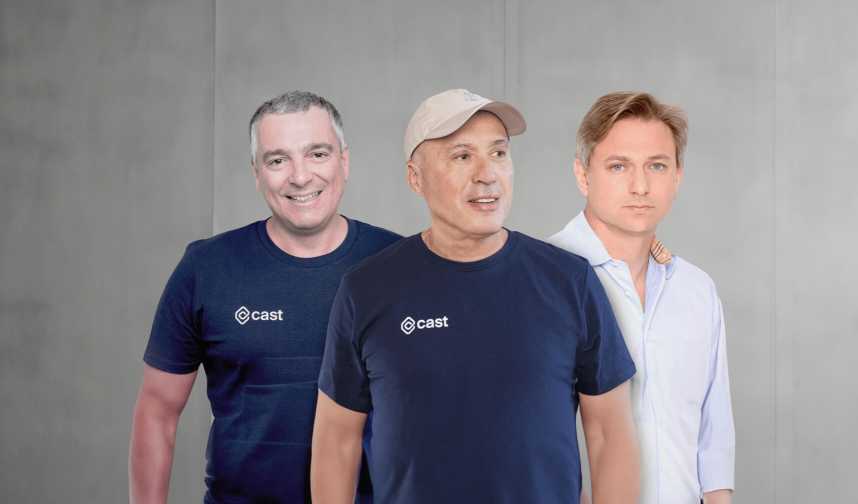
Cast AI just hit a major milestone, officially joining the coveted unicorn club. The AI startup now carries a valuation north of $1 billion after securing a strategic investment from Pacific Alliance Ventures, the U.S. venture arm of South Korea’s Shinsegae Group, a retail and digital giant with more than $50 billion in annual revenue. At the same time, Cast AI rolled out a major platform update: OMNI Compute, a unified control plane that enables companies to tap compute capacity across clouds and regions without modifying their application code.
The timing makes sense. AI demand keeps colliding with a simple problem: GPU shortages and cloud lock-in. Teams want flexibility. They want options. They want to run workloads where compute actually exists. Cast AI wants to be the layer that makes that possible.
“Shinsegae Group’s investment, and our over one billion dollar valuation, underscore the market’s confidence in our platform vision and our ability to execute it globally,” said Cast AI co-founder and CEO Yuri Frayman. “Enterprises don’t just need cheaper infrastructure – they need infrastructure that adapts automatically as workloads and constraints change. That is what our automation agents were built to do, and this investment helps us scale that globally.”
Cast AI Unveils OMNI Compute as Shinsegae Backs Company at $1B+ Valuation
OMNI Compute sits at the center of that pitch. The product discovers available compute across providers and regions, then extends existing Kubernetes clusters to use those resources on demand. GPUs from external clouds appear as native infrastructure. Workloads move freely. No rewrites. No config headaches. No operational gymnastics.
That flexibility matters for teams running AI inference at scale. Instead of pinning workloads to a single cloud or region, OMNI Compute lets them deploy where capacity exists while still meeting compliance rules on where data runs. Cast AI applies the same optimization logic it already uses across its platform, including rightsizing, monitoring, and GPU sharing, so costs stay predictable as usage grows.
“OMNI Compute makes GPUs fungible at the infrastructure layer so capacity isn’t trapped inside a single cloud or region,” said Laurent Gil, Cast AI president and co-founder. “Teams can move, allocate, and run production workloads wherever compute is actually available, with control over cost and performance.”
Oracle is already on board. Through OMNI Compute, Oracle Cloud Infrastructure now exposes its global GPU fleet to Cast AI customers, even if those customers run primarily on rival hyperscalers.
“Partnering with Cast AI opens entirely new markets for Oracle Cloud Infrastructure (OCI),” said Karan Batta, senior vice president at Oracle. “Organizations running on any hyperscaler can now access best-in-class OCI AI infrastructure instantly, in every Oracle Cloud region worldwide. OMNI Compute removes the barriers that traditionally kept enterprises locked into a single cloud, and it allows them to tap into OCI’s high-performance GPU fleet the moment they need it.”
For companies actually deploying AI in production, the appeal is straightforward. Uniphore operates real-time AI systems that require consistent GPU access across regions. Before, that meant juggling contracts, vendors, and availability zones. Now, Cast AI handles the orchestration layer.
“Cast AI’s ability to provision GPUs across multiple clouds and regions without requiring a single change to our application code is a game changer for running AI inference at scale,” said Erik Johnson, vice president of product management at Uniphore. “In production, access to reliable, affordable GPU capacity exactly where and when you need it is mission-critical. OMNI Compute makes that possible.”
The Shinsegae-backed round follows a breakout year for Cast AI. In 2024, the company closed a Series C led by G2 Venture Partners and SoftBank Vision Fund 2, with support from Aglaé Ventures and existing backers including Hedosophia, Cota Capital, Vintage, Creandum, and Uncorrelated Ventures. Its customer list now includes Akamai, BMW, Cisco, FICO, HuggingFace, NielsenIQ, Swisscom, and Samsung.
Samsung has already put Cast AI to work inside its own infrastructure stack.
“With Cast AI, we’ve automated continuous infrastructure optimization on Amazon EKS – reducing operational overhead while improving application efficiency and cost control in real time,” said Kyotack Tylor Kim, head of Samsung’s Next Gen Cloud Group. “OMNI Compute’s unified control plane has the potential to change how enterprises like Samsung run AI infrastructure globally.”
Geographically, Cast AI has been busy building a global footprint. Since its Series C, the company has opened offices in Bangalore, London, New York, and Tel Aviv, and established new subsidiaries across Asia, Europe, and North America.
Pacific Alliance Ventures sees that expansion as the real prize.
“Cast AI has built a category-defining automation platform that aligns with the needs of modern, cloud-first enterprises,” said Hyuk Jin Chung, managing partner at PAV. “We see strong demand for the company’s platform globally, and we’re excited to support the company’s continued expansion in Asia.”
Cast AI now sits at an interesting inflection point. The AI boom has made GPUs a strategic resource. Cloud providers want to control access. Enterprises want freedom. OMNI Compute aims to sit between them, serving as a neutral control layer that routes workloads to where compute resources reside.
If that model holds, Cast AI may end up owning a quiet but powerful slice of the AI stack: the layer that decides where the work actually runs.
Trending Now

Top Tech News Today, March 10, 2026