Zhipu debuts in Hong Kong after $558M IPO, becoming China’s first major AI startup to go public
 Nickie Louise
Posted On January 8, 2026
Nickie Louise
Posted On January 8, 2026
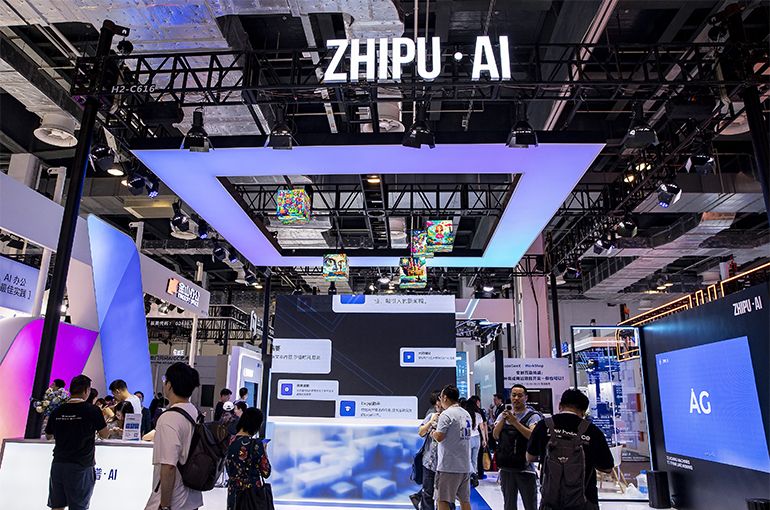
Zhipu has become the first major Chinese AI startup to go public, a milestone that signals how far China’s AI ambitions have progressed amid mounting global pressure. Strongly backed by Beijing, the company sits among a small group of startups known locally as the “AI tigers,” firms viewed as national contenders in the race to build foundational models.
The startup is widely seen as a potential challenger to American AI leaders such as OpenAI, placing its Hong Kong debut in a category far beyond a routine listing.
For years, China’s most ambitious AI builders operated largely out of public view, supported by state funding and private capital. That changed this week when Zhipu, formerly known as Knowledge Atlas Technology JSC, began trading in Hong Kong after raising $558 million in an initial public offering, providing investors with a rare public benchmark for China’s homegrown large language model sector.
Early trading pointed to strong demand. Shares rose as much as 15% above the offer price of HK$ 116.20, valuing the Beijing-based company at roughly HK$4.3 billion and placing the listing among the larger AI flotations seen in recent years. About 37.4 million shares were sold in the offering.
“The stock rose as much as 15% above its offer price of 116.20 Hong Kong Dollars ($15) on Thursday, with around 37.4 million shares on offer by the Beijing-based startup,” CNBC reported.
Founded in 2019 and spun out of Tsinghua University, Zhipu stands apart as the first Chinese developer of large-scale language models to complete an IPO. The debut follows a string of public listings by domestic AI chipmakers and infrastructure firms, marking a shift as China’s AI push moves further into public capital markets.
Since its spinout six years ago, the company has focused on building general-purpose models intended for complex reasoning, coding, and enterprise use. Its latest release, GLM-4.5, builds on the earlier GLM-4 line and introduces two Mixture-of-Experts models. One model has 355 billion parameters, with 32 billion active, and the smaller version has 106 billion parameters, with 12 billion active. Both support a 128,000-token context window.
Zhipu reports that the models achieve GPT-4-level results across benchmarks such as MMLU, GSM8K, and HumanEval. Performance appears strongest in Chinese-language tasks, an area where domestic developers often hold an edge. Internal testing from the company shows a 90.6% success rate in tool calling, outpacing the Claude 3.5 Sonnet and the Kimi K2.
Despite U.S. Sanctions, China’s Zhipu Advances With Successful Hong Kong IPO
The firm belongs to a narrow circle of Chinese AI developers building large language models meant to rival Western systems, a group that includes DeepSeek. DeepSeek drew global attention last year after releasing an open model that unsettled markets and challenged assumptions about China’s technical gap with the U.S.
Zhipu gained wider recognition after OpenAI publicly described the company as operating on the “front line” of China’s AI push, an uncommon acknowledgment from a U.S. competitor. Since then, the startup has expanded its footprint outside China, opening offices in the United Kingdom, Singapore, Malaysia, and across parts of the Middle East. It also runs joint innovation center projects in Southeast Asia, including Indonesia and Vietnam.
The company’s rise has unfolded under heavy geopolitical strain. Zhipu was added to the US Commerce Department’s Entity List in January last year following claims of links to China’s military. Access to advanced semiconductor hardware and overseas expertise has remained limited under U.S. export controls, shaping how the company trains and deploys its models.
According to its prospectus, Zhipu plans to allocate around 70% of the IPO proceeds to research and development focused on general-purpose AI models. The company reported revenue of 312.4 million yuan in 2024, showing early commercial traction as it sells AI services to enterprise and public-sector clients.
Investor attention on Chinese AI firms may not end here. Rival startup MiniMax is expected to move ahead with its own public offering as early as Friday after filing confidentially last year. Its debut would offer another test of how global investors value China’s next generation of large language model builders.
Trending Now
Top Tech News Today, March 25, 2026