Technology News Today – Your Daily Briefing on the AI, Big Tech, and Startup Shifts Reshaping Markets
It’s Wednesday, January 7, 2026, and here are the top global tech news highlights a market in transition—where AI infrastructure, platform power, and capital discipline are colliding in real time.
From Nvidia accelerating its AI chip roadmap and Amazon facing backlash over AI-driven commerce tools, to fresh funding in quantum computing, space tech, and consumer finance, the last 24 hours reveal how quickly the center of gravity is shifting. Big Tech is pushing deeper into AI-first products and hardware cycles, startups are racing to own critical layers of trust, measurement, and data, and regulators are beginning to shape the rules that will govern the next phase of deployment.
Together, today’s stories show an ecosystem moving past experimentation and into execution—where energy, chips, software, and policy are no longer separate conversations but interconnected forces that define who scales, who stalls, and who survives in 2026.
Here’s the full breakdown of the 15 technology news stories shaping the market today.
Technology News Today
Discord Reportedly Files Confidentially as Chat Platforms Chase Public-Market Momentum
Discord has filed confidentially for an IPO, according to Bloomberg, putting one of the most influential consumer and community platforms on a path to the public markets.
If the filing progresses, it could become a bellwether for how investors value “network-density” businesses in 2026: platforms with strong engagement, creator ecosystems, and enterprise spillover, but also real moderation costs and infrastructure bills. Discord sits at the intersection of gaming, creator communities, and workplace collaboration, which gives it multiple growth narratives, but also exposes it to regulatory and trust-and-safety scrutiny that public investors price in quickly.
The bigger takeaway is what this signals about late-cycle tech liquidity. After years of private-market dominance, large platforms and mature startups are increasingly pressured to show durable revenue, clearer governance, and predictable unit economics. If Discord moves forward, it could reset comparables for consumer subscription models, digital communities, and “social infrastructure” businesses that power everything from gaming launches to open-source dev communities.
Why It Matters: A credible Discord IPO track would test whether public markets are ready to reward engagement-heavy platforms again.
Source: TechStartups via Bloomberg.
Amazon AI Shopping Controversy: New Tool Allegedly Lists Products Without Merchant Awareness
Amazon is facing backlash after Bloomberg reported that an AI tool surfaced product listings without merchants’ knowledge, raising new questions about how AI systems remix commerce data and who controls the customer relationship.
For sellers, the concern is not just attribution, but economics: pricing, brand presentation, and customer support can be distorted when AI intermediates the buying journey. For Amazon, this is a strategic bet on becoming the default AI shopping layer, where the platform’s model doesn’t just recommend products, it “constructs” the storefront experience dynamically. That can boost conversion, but it also risks undermining merchant trust, which is foundational to Amazon’s marketplace flywheel.
More broadly, this is a preview of how AI may reshape platform power. If AI-driven aggregation becomes normalized in e-commerce, merchants may push for stronger controls, opt-outs, or new legal frameworks governing product data use and “AI-generated storefronts.” Regulators may also scrutinize whether AI-generated listings create consumer confusion or degrade transparency about the true seller of record.
Why It Matters: AI is moving from recommendations to automated retail assembly, and governance lines remain blurry.
Source: Bloomberg.
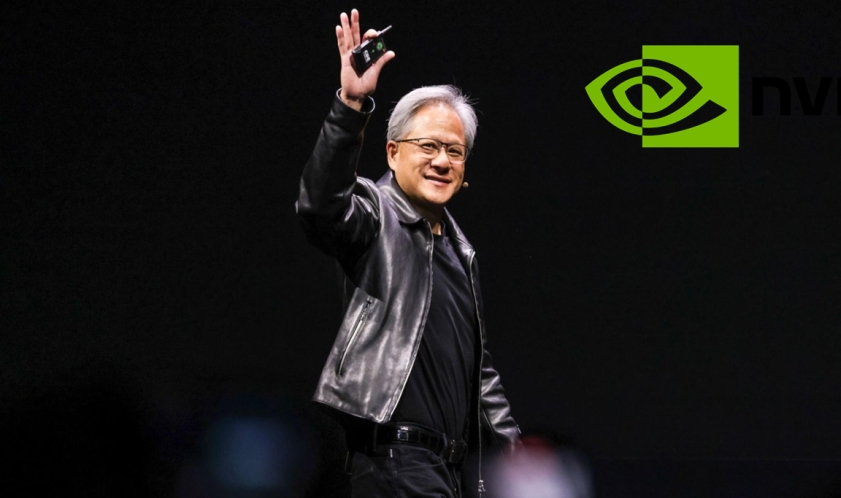
Nvidia Unveils Faster AI Chips Sooner Than Expected to Extend AI Dominance
The Wall Street Journal reports Nvidia unveiled faster AI chips sooner than expected, accelerating a cadence that could reshape how cloud providers plan capacity and how AI infrastructure firms finance hardware.
A faster release cycle changes the math across the stack. Hyperscalers and “neoclouds” must decide whether to buy now or wait, while data-center operators worry about depreciation schedules and residual values. Startups building on rented GPU capacity could face pricing volatility: new chips may lower cost-per-token, but they may also tighten supply during transitions as buyers chase the newest generation.
The strategic message is competitive pressure. If Nvidia accelerates, rivals must respond not only with performance, but with availability, software compatibility, and credible roadmaps. The chip war is no longer just about benchmarks; it is production timing, platform stickiness, and the ability to keep customers from “sitting out” an upgrade cycle.
Why It Matters: Faster chip cadence can compress margins, disrupt GPU economics, and force the entire AI ecosystem to re-plan.
Source: The Wall Street Journal.
2026 AI Power Demand Collides With Grid Reality and Data Center Buildouts
Axios highlights how AI-driven electricity demand is becoming a defining constraint for the next wave of data centers, driving tougher conversations about generation, transmission, and regional capacity.
What is changing is the timeline: cloud and AI infrastructure expansion is moving faster than many grid upgrades, and “where you can build” is increasingly dictated by available power, not just real estate and fiber. That pushes operators toward regions with favorable interconnection, fast permits, and reliable baseload, while also reviving interest in on-site generation and long-term power purchase agreements.
For startups, this is both a bottleneck and a market. Grid software, energy optimization, cooling tech, battery storage, and demand-response platforms all become more valuable when power is scarce and expensive. Investors are likely to reward “infrastructure-grade” energy tech with real deployment paths, not just pilots, because AI growth is turning electricity into a core competitive input.
Why It Matters: AI’s growth curve is increasingly limited by power availability, turning energy into a strategic moat.
Source: Axios.
AI and Copyright Flashpoint: Authors Push Back on “AI Book Club” Features
Semafor reports that authors’ groups are pushing back after Amazon and ElevenLabs enabled AI-driven “book club” style discussions, raising concerns about rights, consent, and whether publishers can opt out.
The dispute reflects a broader pattern: AI features often ship as “utility,” but quickly collide with IP frameworks when they generate derivative experiences around copyrighted works. For authors and publishers, the worry is that AI-generated analysis, summaries, or interactive discussion tools create a new product category built on their content without negotiated terms. For AI companies, the counterargument is that these features can boost discovery and engagement, but that claim rarely resolves the underlying questions of compensation and control.
Zooming out, expect more conflict around AI layers that sit on top of existing media: interactive news explainers, “character chat” for novels, voice models reading books, and personalized learning companions trained on paid content. Even if the tools don’t reproduce full text, they may still pressure licensing norms and invite regulation or litigation.
Why It Matters: AI is transforming content into interactive experiences, and rights holders want new rules to capture that new value.
Source: Semafor.
LMArena Raises at a $600M Valuation to Benchmark AI Models
LMArena, an AI startup known for head-to-head model comparisons, has raised funding at a $600 million valuation, underscoring how evaluation and trust layers are becoming standalone businesses.
As model releases accelerate, enterprises increasingly need reliable ways to compare quality, safety, latency, and cost across vendors. Benchmarking used to be academic and community-driven; now it is becoming commercial infrastructure. That creates a new category: startups that sit between model providers and buyers, offering measurement, governance, and purchasing intelligence.
The strategic implication is power. If a benchmarking platform becomes the default reference point, it can shape market perception, influence procurement, and steer developer adoption. But it also inherits credibility burdens: transparency of methodology, resistance to manipulation, and perceived neutrality. For AI startups, getting “ranked” can meaningfully alter fundraising narratives, partnerships, and pricing leverage.
Why It Matters: In AI, measurement is becoming a moat—and investors are funding the referees.
Source: TechStartups via The Information.
Mobileye Agrees to Acquire Humanoid Robot Startup Mentee Robotics for $900M
TechCrunch reports Mobileye is acquiring Mentee Robotics for $900 million, signaling that autonomy players are moving beyond cars into broader robotics stacks.
The deal matters because it links two hard problems: perception-and-planning expertise from autonomous driving and the messy, physical complexity of humanoid robotics. If Mobileye can port its safety, mapping, and real-time decision systems to general-purpose robots, it gains a new growth lane that is not tied to the pace of consumer-vehicle adoption. For Mentee, being acquired by a company with deep autonomy DNA and industry relationships could accelerate deployment paths in logistics, manufacturing, or service robotics.
The broader ecosystem effect is competitive pressure on standalone humanoid startups. When scaled incumbents begin investing in capabilities, the market can consolidate around a few platforms with the capital to iterate on hardware, train models, and build distribution. That may also steer funding toward robotics “picks and shovels”: actuators, sensors, simulation, and safety verification.
Why It Matters: Big autonomy players are treating humanoids as the next platform, and acquisition prices are rising accordingly.
Source: TechCrunch.
Commonwealth Fusion Systems Installs Reactor Magnet, Signs Deal With Nvidia
Commonwealth Fusion Systems (CFS) has installed a key reactor magnet and signed an agreement with Nvidia, highlighting how AI-era power demand is pushing interest in long-horizon energy bets.
Fusion timelines remain uncertain, but the signal here is strategic alignment: compute and energy are increasingly treated as one planning problem. By partnering with Nvidia, CFS is positioning itself in the AI infrastructure conversation, where credible future power sources are becoming valuable, even before they are commercially available. For Nvidia and major compute buyers, any path to abundant, stable power is worth exploring as electricity becomes a gating factor for growth.
For startups and investors, this is a reminder that the “AI boom” is not just software. It is materials, high-voltage engineering, grid interconnection, cooling, and next-generation. Fusion may still be a long bet, but partnerships like this show how AI demand can pull frontier energy tech closer to the mainstream capital stack.
Why It Matters: When AI meets power scarcity, even frontier energy technologies gain strategic urgency.
Source: TechCrunch.
Former National Security Adviser Warns of Fallout From Reversing AI Chip Export Controls
In a wide-ranging Verge interview, Jake Sullivan argues that rolling back AI chip export controls could have major consequences for US leverage in the global AI hardware race.
The debate sits at the intersection of national security and industrial policy. Export rules can limit adversarial access to high-end compute, but they also shape corporate revenue, global supply chains, and incentives for domestic innovation. If restrictions are eased, chipmakers may benefit in the short term, but policymakers worry that this could accelerate the development of competitive capabilities abroad.
For startups and investors, chip policy is not abstract: it affects GPU availability, cloud pricing, and where frontier-model training happens. It also increases geopolitical risk for companies that rely on cross-border hardware flows. As governments treat AI infrastructure as strategic, expect more volatility from policy shifts—and more pressure on firms to build flexible supply and deployment strategies.
Why It Matters: AI competitiveness is being legislated through chip controls, and policy reversals can ripple through the entire stack.
Source: The Verge.
Microsoft Edge Tech Update: Copilot-Inspired Redesign Signals Deeper AI-First Browser Strategy
The Verge reports Microsoft is testing a Copilot-inspired redesign for Edge, bringing Copilot’s design language into browser UI and settings.
While the changes look cosmetic, the strategic direction is meaningful: browsers are becoming AI surfaces, not just portals to the web. If Microsoft makes Copilot a more native presence inside Edge, it increases the odds that search, shopping, and productivity flows shift toward AI-assisted interactions. That matters for publishers, advertisers, and SaaS companies whose traffic and customer acquisition still depend heavily on browser-mediated discovery.
This also reflects Microsoft’s broader platform play: embedding Copilot consistently across Windows, Office, and the browser strengthens user habit formation and data feedback loops. For competitors, it raises the stakes on default placement. For regulators, deeper integration can renew scrutiny of how dominant platforms bundle services and nudge user behavior.
Why It Matters: Browsers are turning into AI operating layers, and Microsoft wants Copilot to be the default interface.
Source: The Verge.
Sedgwick Confirms Breach at Government Contractor Subsidiary
Sedgwick confirmed a breach involving a subsidiary tied to government contracting, underscoring persistent risks in third-party ecosystems and critical service providers, BleepingComputer reported.
Incidents like this tend to have second-order consequences: even if core operations continue, compromised networks can expose sensitive data, disrupt claims or case-management workflows, and trigger contractual and regulatory obligations. The key issue is not just one company’s defenses, but the density of vendor relationships—where attackers can pivot through subsidiaries, managed services, or shared tooling.
For enterprises and startups alike, the lesson is operational: security due diligence can no longer be a checkbox during vendor onboarding. Customers increasingly demand proof of controls, incident response readiness, and segmentation that prevents a localized event from becoming a systemic breach. As ransomware groups and intrusion crews target high-leverage intermediaries, the “blast radius” problem becomes a board-level risk.
Why It Matters: Vendor-linked breaches continue to demonstrate that organizational charts do not account for cyber risk.
Source: BleepingComputer.
YC Alumni Autonomous Technologies Group (ATG) Raise $15M to Build an AI Wealth Strategist App
Autonomous Technologies Group (ATG), founded by two-time YC alumni, raised a $15M pre-seed funding to build an AI-driven wealth strategist called Autonomous, with YC CEO Garry Tan leading.
The pitch is not “magic stock picks,” but automation around strategies used by high-end wealth managers: portfolio construction, risk management, and tax-aware planning. That targets a real gap between basic robo-advisors and expensive human advisory services. If ATG can deliver defensible outcomes while navigating compliance, it could unlock a broader trend: AI systems that operationalize expert workflows for mass-market users without requiring enterprise budgets.
But finance is also where AI’s limits get tested fast. The company will need clear guardrails, transparent assumptions, and careful handling of market data, user context, and regulatory boundaries. For the startup ecosystem, the round shows that investors still fund consumer-facing applied AI—when the product maps directly to a high-value, recurring problem and monetization is plausible.
Why It Matters: AI is pushing into regulated, high-stakes consumer finance—where trust and compliance decide winners.
Source: Business Insider.
Canadian Quantum Startup Photonic Raises C$180M to Push Quantum Computing Hardware
BetaKit reports that Canadian quantum startup Photonic raised C$180M in funding, adding fresh capital to a sector seeking to translate research breakthroughs into scalable systems.
Quantum remains early, but the market is maturing: investors are increasingly selective about credible roadmaps, manufacturability, and partnerships that can move beyond lab prototypes. Photonic’s raise matters because quantum hardware is a long-cycle, capital-intensive category, where financing itself signals to enterprise and government partners that a company can survive multi-year development cycles.
For the broader tech ecosystem, quantum funding is also about optionality. If progress accelerates, quantum computing could eventually reshape areas such as materials science, complex optimization, and certain cryptographic assumptions. Even before that, talent, tooling, and supply chains built for quantum spill over into adjacent advanced computing and photonics markets—often benefiting startups in sensors, networking, and specialized semiconductors.
Why It Matters: Quantum is still a long bet, but large rounds signal sustained conviction in the next compute frontier.
Source: TechStartups via Bloomberg.
Array Labs Raises $20M to Expand Satellite Radar Capabilities
Array Labs has raised $20M in funding as it advances satellite radar payloads—technology increasingly used for monitoring infrastructure, climate impacts, and geopolitical activity.
Radar sensing has a strategic advantage: it can “see” through clouds and at night, offering persistent observation that complements optical imagery. As demand grows for real-time Earth intelligence, more startups are targeting differentiated sensing modalities and analytics layers that convert raw data into decisions. Funding here signals continued investor interest in space infrastructure that produces proprietary datasets and recurring downstream revenue.
For governments and enterprises, competitive value is not just imagery; it is reliability and coverage. The more frequently and consistently you can measure the physical world, the more you can build products around that data—supply chain visibility, disaster response, maritime tracking, and environmental compliance. Space is becoming a software-defined market, but the defensibility often starts with hardware that generates unique, hard-to-replicate data.
Why It Matters: Space startups that own unique sensing data are building durable moats in the “physical internet” economy.
Source: TechStartups via SatelliteToday.
Experts Map the 2026 Policy Battles Over Safety, Accountability, and Platform Power
TechPolicy.Press compiled expert views on what is at stake in AI policy in 2026, emphasizing governance gaps, accountability, and the growing tension between innovation speed and public risk.
The core issue is institutional capacity. As AI moves into healthcare, finance, hiring, education, and security, regulators must determine what “reasonable assurance” entails: documentation, auditing, incident reporting, and liability when automated systems cause harm. The policy conversation is also shifting from model capability alone to deployment reality: who is responsible when AI is integrated into critical workflows, and how transparency should work when systems are proprietary and rapidly updated.
For founders, this is not a distant debate. Compliance expectations can quickly become go-to-market constraints, while regulatory clarity can also unlock adoption by risk-averse enterprises. The startups that win in regulated environments will be the ones that treat governance as product design—building auditable logs, clear guardrails, and measurable performance claims that hold up under scrutiny.
Why It Matters: 2026 is shaping up to be a year when AI adoption is driven as much by policy and accountability as by model performance.
Source: TechPolicy.Press.
Wrap Up
Across the board, today’s stories point to a tech landscape entering a more consequential phase—one where speed alone is no longer enough. AI’s expansion is now bounded by power availability, hardware cadence, regulatory scrutiny, and trust, while capital is flowing toward companies that control foundational layers rather than surface-level features.
Big Tech’s moves signal consolidation around platforms and infrastructure, not experimentation, as startups increasingly position themselves as essential suppliers in energy, compute, measurement, security, and data. At the same time, policymakers are stepping more visibly into the arena, shaping incentives and constraints that will define how AI and emerging technologies scale globally.
The message is clear: 2026 is becoming a year of execution, accountability, and structural advantage. The winners will be those who can operate at the intersection of technology, policy, and real-world constraints—while turning complexity into durable, defensible growth.
That’s your quick tech briefing for today. Follow us on X @TheTechStartups for more real-time updates.
Trending Now
Top Tech News Today, March 25, 2026