OpenAI launches ChatGPT Health, a private AI hub and dedicated space for secure health conversations
 Nickie Louise
Posted On January 7, 2026
Nickie Louise
Posted On January 7, 2026

Health questions have quietly become one of the most common reasons people turn to ChatGPT. Millions ask about lab results, medications, diet changes, insurance tradeoffs, or how to prepare for a doctor visit. Until now, those conversations have coexisted with everything else, from coding help to travel planning. OpenAI is changing that with the launch of ChatGPT Health, a separate, protected space built entirely around health conversations.
ChatGPT Health introduces a dedicated experience within ChatGPT that lets users connect medical records and wellness apps and ask questions grounded in their own data. The goal is not diagnosis or treatment. The focus stays on helping people feel informed and prepared before, during, and after interactions with the healthcare system.
Announcing the launch on X, OpenAI wrote:
“Introducing ChatGPT Health — a dedicated space for health conversations in ChatGPT. You can securely connect medical records and wellness apps so responses are grounded in your own health information. Designed to help you navigate medical care, not replace it. Join the waitlist to get early access.”
ChatGPT Health Is Here: OpenAI Launches a Privacy-Focused AI Experience for Healthcare
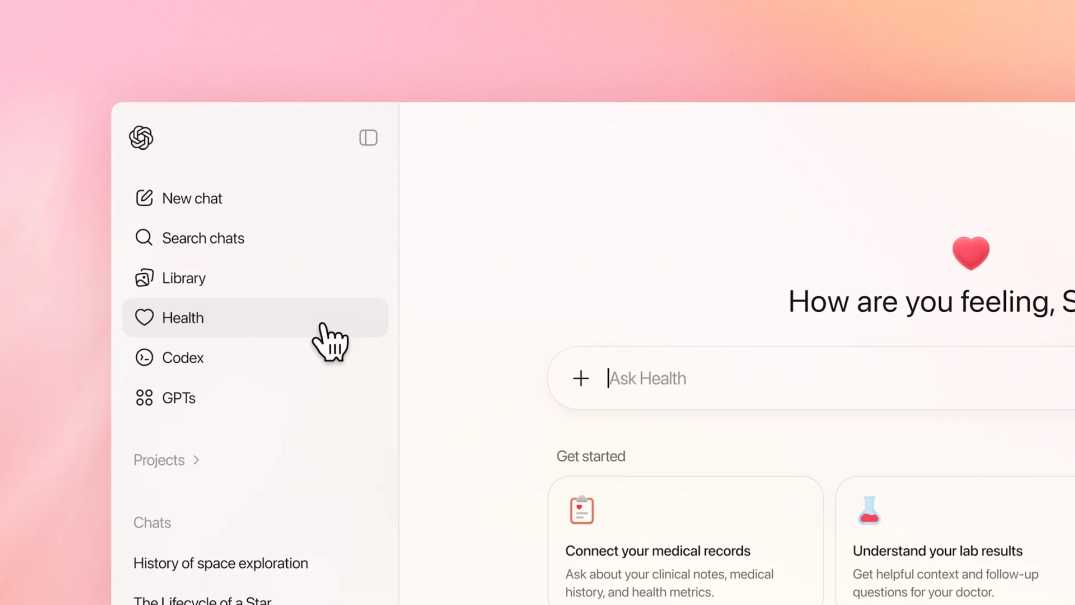
Health data today often resides across portals, PDFs, wearables, and apps that rarely integrate. People are left piecing together timelines, results, and notes on their own. OpenAI says ChatGPT Health exists to bring those fragments into one place so users can see patterns over time rather than reacting to isolated moments.
ChatGPT Health can help you navigate everyday questions and spot patterns over time, so you feel more informed, prepared, and confident for important medical conversations. pic.twitter.com/UK6U4OosDn
— OpenAI (@OpenAI) January 7, 2026
The company says health and wellness questions already draw more than 230 million users each week across ChatGPT. Health builds on that demand by adding protections for sensitive information. Conversations inside Health live in a separate space with isolated storage and purpose-built encryption. Those chats are not used to train OpenAI’s foundation models.
Users can connect medical records through partnerships with U.S. health data networks and wellness services such as Apple Health, Function, and MyFitnessPal. Once connected, ChatGPT Health can help explain recent test results in plain language, summarize care instructions, prepare questions for upcoming appointments, or reflect on diet and activity patterns over time. The system prioritizes context and clarity over clinical decision-making.
Why OpenAI Built ChatGPT Health as a Separate, Protected Space Inside ChatGPT
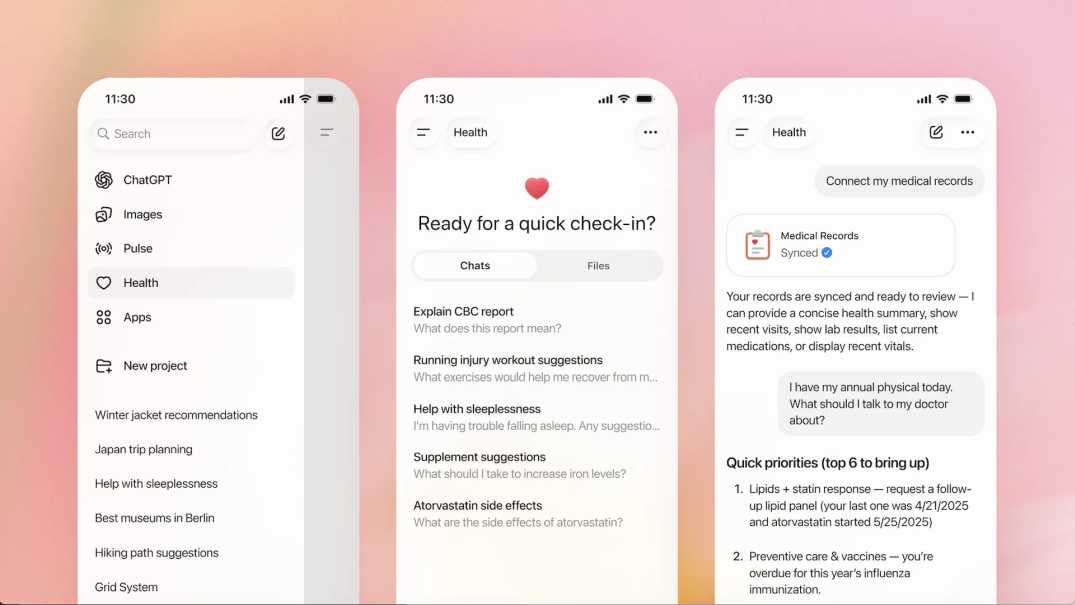
OpenAI stresses that Health supports medical care rather than replacing clinicians. If a health-related conversation starts elsewhere in ChatGPT, the system may suggest moving to Health to access its additional privacy controls. Health conversations stay contained within that space. Information created there does not flow back into regular chats, and non-Health conversations cannot access Health files, memories, or records.
Users keep control. Health memories can be reviewed or deleted at any time, and access to connected apps or medical records can be revoked instantly through settings. Multi-factor authentication is available to enhance account security.
The product reflects years of behind-the-scenes work with physicians. OpenAI says more than 260 doctors across 60 countries and dozens of specialties have provided feedback on model outputs over hundreds of thousands of reviews. That input shaped how ChatGPT Health responds, including when to encourage follow-ups with clinicians and how to explain medical information without stripping away nuance.
Health is evaluated using HealthBench, a clinical assessment framework built with physician input. Rather than testing for trivia or exam recall, HealthBench assesses how responses align with real clinical expectations, such as safety, clarity, appropriate escalation, and respect for personal context. OpenAI says this process helps the system stay useful during moments that matter.
Access to ChatGPT Health begins with a waitlist and a limited early-user group. The rollout covers ChatGPT Free, Go, Plus, and Pro plans outside the European Economic Area, Switzerland, and the United Kingdom. OpenAI plans to expand access over the coming weeks and make Health available on the web and iOS. Some medical record connections and apps are available only in the U.S., and Apple Health requires iOS.
For OpenAI, ChatGPT Health marks a careful step into one of the most sensitive areas people bring to AI systems. Rather than positioning the product as a medical authority, the company frames it as a private workspace where users can ask better questions, spot trends, and arrive at appointments better prepared. In healthcare, that shift alone can make a difference.
Trending Now

Top Tech News Today, March 25, 2026