SoftBank to acquire DigitalBridge for $4B in bold bet on AI infrastructure and data centers
 Daniel Levi
Posted On December 29, 2025
Daniel Levi
Posted On December 29, 2025
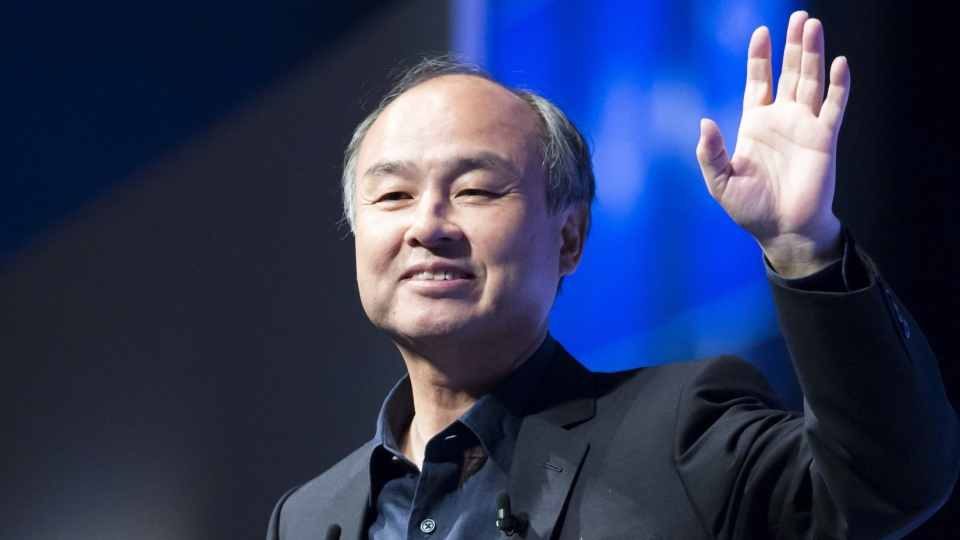
SoftBank is making another high-stakes move in the global AI race, this time by acquiring the physical backbone on which modern artificial intelligence depends.
The Japanese conglomerate said it has agreed to acquire DigitalBridge Group in an all-cash deal valued at about $4 billion, a transaction that puts data centers, cell towers, fiber networks, and edge infrastructure at the center of SoftBank’s long-term strategy. The message is clear: AI leadership will be decided by who controls compute, connectivity, and capacity at scale.
The move follows reports from just a week ago that SoftBank was in talks to buy Agility Robotics for about $900 million, signaling a broader push into humanoid robotics.
SoftBank’s $4B DigitalBridge Deal Signals Its Push to Build the Infrastructure Behind Artificial Super Intelligence
For SoftBank, this deal fits directly into Masayoshi Son’s long-stated ambition to build what he calls Artificial Super Intelligence. Models alone won’t get there. Training, deployment, and global delivery demand massive physical systems, and DigitalBridge already sits at the intersection of those requirements.
“As AI transforms industries worldwide, we need more compute, connectivity, power, and scalable infrastructure,” said Masayoshi Son, Chairman and CEO of SoftBank Group Corp. “DigitalBridge is a leader in digital infrastructure, and this acquisition will strengthen the foundation for next-generation AI data centers, advance our vision to become a leading ASI platform provider, and help unlock breakthroughs that move humanity forward.”
DigitalBridge is no newcomer to this space. The firm has spent more than three decades investing in and operating digital infrastructure assets worldwide. Its portfolio spans data centers, towers, fiber, small cells, and edge facilities, with roughly $108 billion in assets under management. Headquartered in Boca Raton, Florida, the company operates across North America, Europe, the Middle East, and Asia, serving many of the same technology giants now racing to scale AI workloads.
Marc Ganzi, DigitalBridge’s CEO, framed the deal as a long-term alignment rather than a simple exit.
“The buildout of AI infrastructure represents one of the most significant investment opportunities of our generation,” Ganzi said. “SoftBank shares our DNA as builders and long-term investors committed to scaling transformational digital infrastructure. Their vision, capital strength, and global network will allow us to accelerate our mission with greater flexibility, invest with a longer-term horizon on behalf of our investors, and better serve the world’s leading technology companies as they scale their AI ambitions.”
Under the agreement, SoftBank will acquire all outstanding DigitalBridge shares for $16.00 per share in cash, a 15% premium over the company’s closing price on December 26, 2025, and a 50% premium to its unaffected 52-week average as of early December. A special committee of independent directors recommended the deal, and DigitalBridge’s board approved it unanimously.
After the transaction closes, DigitalBridge will continue operating as a separately managed platform, with Ganzi remaining at the helm. That structure signals continuity for partners and investors, even as SoftBank’s balance sheet and global reach come into play.
The acquisition arrives at a moment when AI infrastructure has become a constraint rather than an afterthought. Power availability, network latency, and physical capacity now shape what AI systems can do in the real economy. By folding DigitalBridge into its ecosystem, SoftBank can originate, finance, operate, and scale these assets under one umbrella, strengthening its control over the layers beneath AI applications.
Regulatory approvals remain outstanding, and the companies expect the deal to close in the second half of 2026. If it clears, SoftBank will add another heavyweight asset to a portfolio that already includes Arm and the Vision Funds, reinforcing its bet that the next phase of AI competition will be won on concrete, steel, fiber, and electrons as much as software.
Trending Now
Top Tech News Today, March 23, 2026