Top AI Startups That Shut Down in 2025: What Founders Can Learn
 Daniel Levi
Posted On December 9, 2025
Daniel Levi
Posted On December 9, 2025
In May, we reported on Builder.ai, the Microsoft-backed AI startup once valued at $1.2 billion, after the no-code darling filed for bankruptcy. The company, which promised anyone could build an app without writing a single line of code using its assistant “Natasha,” quickly became the poster child for AI startups that shut down in 2025.
Its collapse wasn’t an outlier. It was an early signal of what was coming.
Over the next twelve months, a wave of AI startups across consumer hardware, enterprise tools, developer platforms, and generative apps would shut down — some abruptly, some quietly, some with admirable transparency.
And while each story is different, the pattern is unmistakable.
2025 was supposed to be the year AI startups broke out. Instead, it became the year the easy stories ran out.
After two years of frenzied funding and viral demos, many AI-first companies discovered that the hard part wasn’t raising a round or launching a slick product video. It was building something people would keep paying for once the hype cooled — all while competing against big platforms that now ship AI features by default.
Some of these startups raised hundreds of millions. Others were lean, deeply technical teams. A few shut down because they ran out of money. One shut down because the founders believed keeping the product online was too risky.
This isn’t a “startup graveyard.” It’s a look at 10 notable AI startups that shut down in 2025 — and the specific lessons founders can take from each one.
Failed AI Startups of 2025 (So Far)
How we chose this list
For this piece, we focused on AI startups that:
-
Publicly announced a shutdown, wind-down, or sale of core assets in 2025, and
-
were AI-first: meaning AI was central to the product, not a last-minute add-on.
The list is not exhaustive. Hundreds of AI tools and projects quietly disappeared this year. These 10 cases stand out because they were well funded, widely discussed, or unusually candid about why they didn’t work.
1. Builder.ai – A unicorn that ran out of trust and runway
Founded: 2016 • Shut down: 2025
HQ: London • Funding: ~$445M • Peak valuation: $1.5B
Builder.ai promised to make custom app development “as easy as ordering a pizza.” Its platform mixed reusable code blocks with an AI assistant called Natasha, then routed work to human engineers behind the scenes. At its peak, the company raised money from Microsoft, the Qatar Investment Authority, and top-tier VCs, and hit unicorn status.
Behind the scenes, though, the story was messier. Investigations found that AI capabilities were overstated, large parts of projects were handled manually, and revenues were allegedly inflated. A key lender eventually seized the company’s cash, the CEO was pushed out, hundreds of staff were laid off, and by mid-2025, Builder.ai entered insolvency.
What went wrong
-
Aggressive marketing that didn’t match technical reality
-
Questionable financial reporting and an unsustainable burn rate
-
Once trust was fractured with lenders, investors, and customers, fresh capital dried up
Lesson for founders
You can’t “AI-wash” your way to a durable business. Overstating what your product does might work for a quarter or two, but in AI — where expectations are high, and results are easy to test — broken promises come back fast. Tie your story to what the product can actually deliver, and keep your books as clean as your pitch deck.
2. Humane – $241M, huge buzz, and a consumer AI device that didn’t work

Founded: 2018 • Shut down (as a startup): 2025
HQ: San Francisco • Funding: ~$241M • Exit: Asset sale to HP (~$116M)
Humane was one of the most hyped AI hardware stories in years. Started by former Apple veterans, the company spent years in stealth building the Humane AI Pin, a wearable device that clipped to your clothing, used voice and a tiny projector, and was pitched as a step “beyond the smartphone.”
The launch in late 2024 was brutal. Reviewers found the device unreliable, slow, and confusing to use. Battery life and heat issues made it worse. Tech reviewers called it “bad at almost everything it does.” Sales never recovered. By February 2025, Humane announced it would discontinue the AI Pin and sell its team and IP to HP for $116 million. Customers were told their pins would be remotely disabled after cloud services shut down. Humane finally shut down in February after burning through $230M in investor cash.
What went wrong
-
The core experience simply wasn’t good enough for everyday use
-
The value proposition vs. a smartphone was vague and unconvincing
-
Hardware economics are unforgiving: high R&D costs, low volumes, and no repeat buyers
Lesson for founders
No amount of design pedigree or investor firepower can save a product that doesn’t work for real users. In consumer AI and hardware, you don’t get many second chances. Before you scale marketing, make sure the experience is genuinely better than the status quo — not just more futuristic.
3. Noogata – Enterprise AI that never scaled beyond pilots
Founded: 2019 • Shut down: May 2025
HQ: Israel • Funding: $28M
Noogata built an AI analytics platform for large companies, promising predictive insights across sales, marketing, finance, and supply chain. Backed by Team8 and other well-known funds, it signed big names like PepsiCo and Colgate and raised $28M across seed and Series A.
On paper, it had all the right ingredients: a hot category, marquee customers, and solid backing. But enterprise growth never matched expectations. Deals stayed small or stuck in pilot mode. By 2025, Noogata had missed key business milestones, couldn’t raise a new round, and announced it would shut down and try to sell its technology.
What went wrong
-
Enterprise sales cycles ran longer than the company’s financial runway
-
Reference customers didn’t turn into broad, high-ACV rollouts
-
As “AI features” became standard in cloud platforms, differentiation eroded
Lesson for founders
Landing big logos is suitable for the slide deck, but not enough for survival. In enterprise AI, the real milestone isn’t “we signed PepsiCo” — it’s “we’re deployed widely and expanding inside PepsiCo.” If pilots aren’t scaling into meaningful revenue, that’s a warning light, not a trophy.
4. Locale.ai – A quiet, principled shutdown driven by burnout
Founded: 2019 • Shut down: 2025
HQ: Bengaluru • Funding: ~$5M
Locale.ai built a geospatial analytics platform that helped logistics, delivery, and mobility companies understand where their operations were breaking down. It wasn’t a unicorn, but it had paying customers around the world and a solid reputation in its niche.
After six demanding years — including navigating the pandemic — the founders reached a hard conclusion: the business was respectable but not scaling fast enough to justify another long, grinding push. Enterprise sales cycles were heavy and founder-led. Burnout was real. In 2025, the team chose to wind down responsibly, return remaining money to investors, and help customers transition.
What went wrong
-
Growth plateaued in a niche that required high-touch, custom work
-
Sales remained too dependent on the founders’ time
-
The emotional and physical toll of six years of nonstop building caught up
Lesson for founders
Not every shutdown is a blow-up. Locale.ai shows that ending a company can be a rational, even healthy decision. In the long term, you need a business that is scalable and sustainable for the people running it. If the only way forward is more grind with no apparent upside, closing the chapter can be the right call.
5. Subtl.ai – Strong RAG tech, scattered focus, and no repeatable motion
Founded: 2019 • Shut down: July 2025
HQ: Hyderabad • Funding: ~$200K
Subtl.ai built an enterprise “chat with your documents” platform well before that phrase became trendy. It combined custom document-processing pipelines with retrieval-augmented generation (RAG) and reportedly outperformed larger models on certain internal knowledge tasks. The team landed pilots with banks, airports, and defense organizations, and even filed patents.
But the business never settled on a clear, repeatable niche. Each new client seemed to require a custom project. The team also underinvested in a self-serve, developer-friendly product — there was little community or open-source pull. When the funding environment tightened in 2025, soft investor interest never turned into term sheets, and the company ran out of options.
What went wrong
-
Chasing too many verticals without owning one specific use case
-
No scalable self-serve or developer motion, despite having strong APIs
-
Underestimating the sales and positioning work needed to turn good tech into a business
Lesson for founders
Having better benchmarks than a big model doesn’t matter if buyers don’t know about it, don’t care, or can’t easily adopt your product. Pick a narrow problem, solve it end-to-end, and make it trivial for users or developers to get started. “We can do anything with your documents” sounds impressive, but it often leads to doing nothing repeatedly.
6. Tune AI – An “all-in-one” GenAI platform in a market full of giants
Founded: 2018 (as Nimblebox) • Shut down: 2025
HQ: India / US • Funding: Seed from Accel, Flipkart
Tune AI started as Nimblebox, a platform for quickly spinning up machine learning projects. As generative AI took off, it rebranded and pivoted into a broader GenAI platform: Tune Chat for AI assistants and Tune Studio for fine-tuning and deploying large language models. The team claimed hundreds of thousands of users and deep integrations with popular models.
The problem: by 2024–2025, major cloud providers and open-source ecosystems were releasing similar tooling, often at lower cost or bundled. Many of Tune AI’s users were free developers kicking the tires, not enterprises paying real money. Infrastructure costs stayed high while margins and differentiation shrank. Without a clear wedge, the big clouds couldn’t easily copy. Tune AI quietly shut down.
What went wrong
-
Trying to be a general-purpose AI platform in a space dominated by hyperscalers
-
Large top-of-funnel user numbers but weak conversion to paying customers
-
A feature set that drifted toward “table stakes” rather than something unique
Lesson for founders
If a hyperscaler can ship your core value as a checkbox feature, you’re in trouble. Platforms can be powerful businesses, but only if you offer something the big players can’t or won’t do. Otherwise, focus on a thin layer where you can own a specific workflow or industry.
7. Wuri – An “AI wrapper” without a defensible niche
Founded: 2022 • Shut down: 2025
HQ: India / YC W23 • Funding: Seed / YC-backed
Wuri began as a consumer app that turned text stories into visual novels using generative AI. Later, it pivoted into enterprise AI solutions and “AI wrappers” for different business use cases. It went through Y Combinator, raised a small seed round, and experimented across multiple directions as the AI boom accelerated.
That constant shifting was the red flag. Wuri never locked into a specific market or problem where it could lead. As larger platforms rolled out their own generative features and dozens of similar startups crowded the space, its offering looked more and more like commodity infrastructure with a thin UI layer.
What went wrong
-
Weak differentiation in a crowded “AI tools” segment
-
Multiple pivots without a strong signal of product-market fit
-
Rising customer acquisition costs and low willingness to pay for yet another AI interface
Lesson for founders
In hot markets, “we’ll be the AI layer for X” sounds attractive but rarely lasts if there’s nothing special under the hood. You either need proprietary data, unique distribution, or a deep vertical focus. Without that, you’re just another tab in someone’s browser.
8. CodeParrot – “Pivot hell” in the AI dev tools race
Founded: 2022 • Shut down: July 2025
HQ: India / US • Funding: $500K (YC W23)
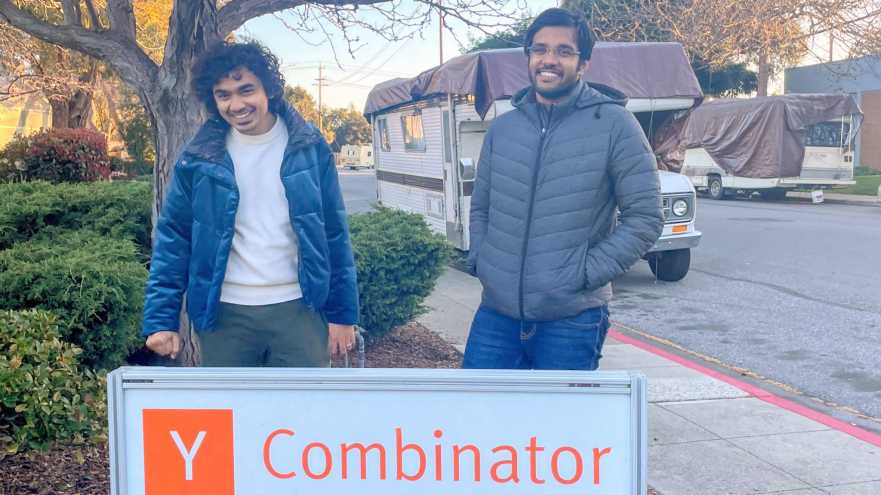
CodeParrot set out to convert Figma designs into production-ready frontend code using AI. It joined Y Combinator, shipped a VS Code extension and multi-framework support, and caught early interest from developers who liked the idea of skipping boilerplate work.
But the generated code wasn’t reliable enough for production. Teams still had to spend time fixing outputs, which erased the value. At the same time, heavyweight competitors like GitHub Copilot and Replit were expanding their own AI tooling. CodeParrot’s founders pivoted repeatedly to new use cases and segments, but MRR peaked around $1.5K. With no new funding and no breakthrough in traction, they decided to shut down.
What went wrong
-
Output quality never crossed the threshold where developers truly trusted it
-
Repeated pivots diluted focus instead of revealing a sharp niche
-
Going head-to-head with giants in core developer workflows without a clear edge
Lesson for founders
Developers are willing to try almost anything once — keeping them is the hard part. If your product creates as much cleanup as it saves, adoption will stall. In dev tools, especially, you need a specific job where you’re clearly better, not a vague “AI assistant for everything.”
9. Astra – Co-founder misalignment meets enterprise friction
Founded: ~2023 • Shut down: July 2025
HQ: Bengaluru • Funding: Angel-backed
Astra built an AI assistant for sales teams, promising to automate routine tasks and surface deal insights from calls, emails, and CRM data. It signed a couple of enterprise pilots and even secured investment from the co-founder of Perplexity AI — a strong signal for such a young company.
Under the surface, the company was struggling. Founders reportedly disagreed on how fast to scale and what path to pursue. At the same time, enterprise customers were hesitant to give a young startup deep access to their sales data and internal systems. Sales cycles stretched out. Fundraising stalled. By mid-2025, the team chose to shut down and move on.
What went wrong
-
Co-founder misalignment on pace and strategy
-
Typical enterprise AI trust issues: “Do we really want a small startup reading all our data?”
-
Long sales cycles that didn’t match the company’s financial runway
Lesson for founders
In enterprise AI, the tech is only half the battle. Alignment inside the founding team and trust outside with customers are just as critical. If the team isn’t on the same page and the buyers are nervous, even a good product will stall.
10. Yara AI – Shutting down on purpose for ethical reasons
Founded: 2024 • Shut down: November 2025
HQ: UK • Funding: Pre-seed / founder-backed
Yara AI took on one of the most complex problems in tech: an AI mental health companion. Co-founded by a seasoned tech executive and a clinical psychologist, the product offered CBT-style exercises and conversational support for everyday stress, sleep, and anxiety.
“The creator of an AI therapy app shut it down after deciding it’s too dangerous. Here’s why he thinks AI chatbots aren’t safe for mental health,” Fortune noted.
The product gained early users and could have pursued a subscription model. Instead, the founders took a hard look at the risk profile. AI that chats about stress might be helpful for mild cases — but for someone in crisis, it could be actively dangerous. With no clear regulatory framework, high moral stakes, and no way to guarantee that only “low-risk” users would show up, the team shut Yara down and pulled it from app stores.
What went wrong
-
The gap between “wellness chatbot” and “clinical support” proved impossible to manage safely.
-
Current AI models are not reliable enough to handle severe mental health crises.
-
The founders felt they couldn’t ship a product that might one day be implicated in real harm.
Lesson for founders
Just because AI can be applied to something doesn’t mean it should — at least, not yet. In high-stakes domains like mental health, safety, and ethics aren’t nice-to-haves; they are the product. If you can’t meet that bar, shutting down or pivoting is the responsible move.
The patterns behind 2025’s AI shutdowns
Across these 10 stories, a few themes repeat:
1. Product-market fit stayed shallow
Pilots, signups, and headlines were abundant. Durable revenue was not. CodeParrot, Subtl.ai, Tune AI, and Wuri all showed that demos and early buzz mean little if customers don’t stick around and pay.
2. Big rounds hid big problems
Builder.ai and Humane raised huge sums and looked unstoppable — until they weren’t. In both cases, plenty of capital delayed hard questions about unit economics and product reality. When the reckoning came, it was brutal.
3. Competing with platforms is a losing game (without a wedge)
Tune AI and Wuri discovered how quickly hyperscalers and open-source communities can close the gap. If your product is essentially a nicer front end to someone else’s API, your advantage has a short half-life.
4. Enterprise AI is slow, and the runway is short
Noogata, Astra, Locale.ai, and Subtl.ai all ran into the same wall: long sales cycles, heavy integration work, and cautious customers — while the bank balance ticked down. Enterprise AI can work, but only if your milestones and burn match reality.
5. Ethics and safety are becoming real stop signs
Yara AI is a rare example of founders pulling the plug before a scandal. As AI moves deeper into health, finance, and safety-critical decisions, more teams will hit this limit: “We can’t do this responsibly with today’s tech.”
A quick self-check for AI founders in 2026
If you’re building in AI right now, ask yourself:
-
Can I explain our moat without mentioning which model we use?
-
Do we know what a profitable customer looks like, or are we still guessing?
-
Are our biggest logos actually deploying us widely, or are we still in pilot land?
-
If our primary model provider changed pricing or terms tomorrow, what happens?
-
Are we chasing every shiny AI use case, or owning one specific problem?
-
Could this product harm someone if it fails in an edge case — and if so, are we really ready for that responsibility?
If several of those questions sting, you’re not doomed. But 2025’s shutdowns are a signal to adjust now, not later.
Closing
2025 was the year the AI party got serious. The next wave will belong to founders who treat AI as a powerful tool, not magic — and who are willing to do the unglamorous work of focus, distribution, margins, and ethics.
If you can combine those with sharp execution, you’re already doing more than many of the startups on this list ever did.
Trending Now
Top Tech News Today, March 25, 2026