Apple’s AI chief steps down after Siri stumbles; Gemini veteran Amar Subramanya steps in to save Apple’s AI future
 Nickie Louise
Posted On December 2, 2025
Nickie Louise
Posted On December 2, 2025
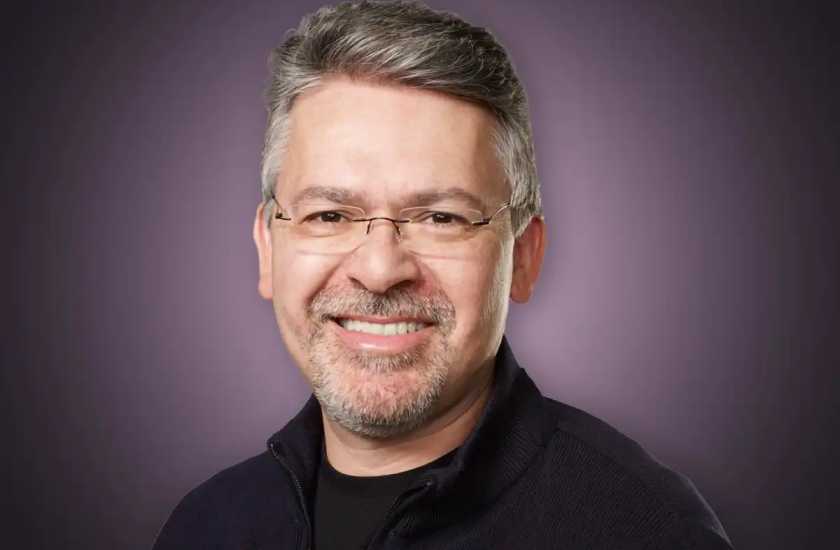
Apple is making one of its most significant AI leadership moves in years, following ongoing trouble with its Siri reboot project that forced a reset at the top. On Monday, the company announced that John Giannandrea, its longtime AI chief and Senior Vice President of Machine Learning and AI Strategy, is stepping down from his role and will move into an advisory position before retiring in spring 2026.
His exit lands at a sensitive moment for Apple, which has trailed Google, OpenAI, and Microsoft in the race to ship dependable, modern AI features at scale.
“Apple today announced John Giannandrea, Apple’s senior vice president for Machine Learning and AI Strategy, is stepping down from his position and will serve as an advisor to the company before retiring in the spring of 2026. Apple also announced that renowned AI researcher Amar Subramanya has joined Apple as vice president of AI, reporting to Craig Federighi. Subramanya will be leading critical areas, including Apple Foundation Models, ML research, and AI Safety and Evaluation,” the iPhone maker said in a news release.
Giannandrea arrived in 2018 with a reputation built during his time running AI and Search at Google. For a while, his hiring looked like a turning point. He expanded Apple’s internal AI infrastructure, laid the foundation for improvements to Face ID, and advanced early work on the company’s broader Apple Intelligence initiative. But Siri’s long-promised overhaul became the defining project of his tenure — and ultimately the one that unravelled it.
Siri’s Collapse Forces Apple to Bring In Gemini Veteran to Lead AI Rebuild
Inside Apple, the assistant’s reboot became a source of frustration. What was pitched as a major upgrade, complete with deeper personalization and tighter app-level awareness, kept hitting snags. The trouble spilled into public view after Apple teased a smarter Siri at WWDC 2024 but failed to deliver anything meaningful the following year. By early 2025, the delays were hard to ignore. Bloomberg reported internal tension across teams, budget issues, and even an unflattering nickname inside the company: “AI/MLess.” The problems reached a point where Tim Cook pulled Giannandrea off the project and handed oversight to Mike Rockwell, the executive behind Vision Pro.
A grim moment came weeks before a planned April release. Craig Federighi tried to demo the new Siri on his iPhone. Key features failed on the spot. The launch was postponed with no replacement date. For a company that prides itself on polish, it was a rare but loud misfire.
Apple Intelligence didn’t help steady the narrative. After its debut last fall, complaints flooded in. Notification summaries misread news stories so badly that Apple shut the feature off. Reviewers found the suite underwhelming. Meanwhile, competitors were shipping assistants that handled far more complex tasks with far fewer breakdowns. The talent drain didn’t help, with top researchers leaving for Meta and OpenAI at a steady pace.
Apple framed Giannandrea’s departure with appreciation. “Since joining Apple in 2018, John has played a key role in our AI and machine learning strategy, building a world-class team and leading them to develop and deploy critical AI technologies,” the company said. Cook thanked him for “enriching the lives of our users” and emphasized the next stage of Apple’s ambitions, now overseen by Federighi.
That next stage rests on a new leader: Amar Subramanya, a veteran who has worked at both Google and Microsoft. Apple created a new Vice President of AI role specifically for him. Subramanya spent 16 years at Google and helped shape the engineering behind the Gemini assistant. Earlier this year he joined Microsoft as a Corporate Vice President working on Copilot and Azure’s AI stack. His stop there was brief — barely five months — before Apple made its move.
Subramanya brings a background rooted in building and shipping AI systems at a massive scale, something Apple has struggled with publicly. He will oversee foundation models, machine learning research, and AI safety, reporting directly to Federighi. Other parts of Apple’s AI org — such as infrastructure and search teams — will shift under Sabih Khan and Eddy Cue as part of the overhaul.
Apple is positioning him as the person meant to stabilize and accelerate its AI strategy. “Amar’s deep expertise in both AI and ML research and in integrating that research into products and features will be important to Apple’s ongoing innovation and future Apple Intelligence features,” the company said. Cook added that this marks “a new chapter” for the company.
His appointment has also prompted a wave of pride in India, where he was educated at Bangalore University before pursuing his PhD in the U.S. Local media described his move as a win for the country’s deep pool of AI talent.
The most surprising part of Apple’s reset is its partnership with Google — a twist that would have seemed unthinkable a few years ago. Apple is licensing a special 1.2-trillion-parameter version of Gemini that runs through its Private Cloud Compute system, giving Siri access to far stronger reasoning and summarization abilities than Apple’s own models can currently deliver. The deal is reportedly valued at around $1 billion per year.
It’s not a permanent solution. Inside Apple, teams are racing to build the company’s next major model slated for 2027, which is said to target a trillion parameters of its own. But the spring 2026 release window for Siri left no margin for further delays. Gemini became the bridge Apple needed.
Once live, Gemini’s impact will extend beyond Siri. Apple is expected to plug it into Safari’s AI-driven search features and Spotlight’s contextual queries. By WWDC 2026, the company plans broader updates across iOS 27 and macOS 27, plus new hardware to showcase the assistant’s improved capabilities, including a smart home display and a refreshed Apple TV/HomePod.
Critics point out the irony of Apple — the world’s loudest advocate for vertical integration — relying on a competitor’s model to rebuild its AI credibility. Supporters say it’s a pragmatic pivot for a company that could no longer afford to wait.
The stakes are high. With iPhone sales softening and services revenue carrying more weight than ever, investors see AI as central to Apple’s future. Analysts at Wedbush Securities have pointed to Siri as a deciding factor in whether Apple can reach $100 billion in annual services revenue by 2027. Some iPhone 16 owners already filed class-action lawsuits after Intelligence features were delayed, arguing they bought devices based on promises Apple couldn’t deliver.
The leadership reshuffle comes as speculation builds around Cook’s long-term future, with some expecting an exit around 2026. For now, Subramanya inherits a massive task: deliver a version of Siri strong enough to spark an upgrade cycle and restore confidence among users, developers, and investors.
Cook summed up the stakes simply: AI has been “long central to Apple’s strategy.” With Subramanya stepping in, this next chapter determines whether Apple can regain momentum — and whether the new Siri can live up to years of expectations.
Trending Now
Top Tech News Today, March 25, 2026