Sakana AI, Japan’s answer to OpenAI, in talks to raise $100M in Funding at $2.5B valuation
Posted On October 21, 2025
0
2.3K Views
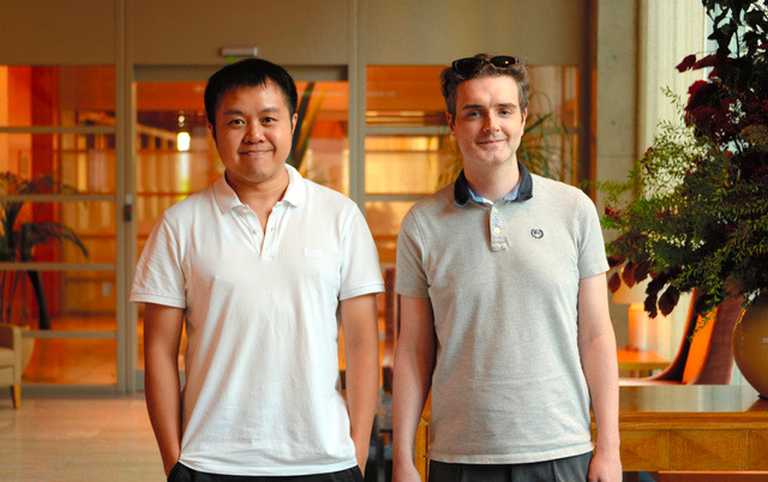
Tokyo’s fast-rising AI startup Sakana AI is once again drawing global attention — and big money. The company, founded just two years ago by former Google researchers David Ha and Llion Jones, is reportedly in talks with investors in Japan and the United States to raise $100 million, which would lift its valuation to around $2.5 billion.
The deal would mark a 66% jump from its previous round and further solidify Japan’s place in the global AI race. The funding, first reported by The Information, comes at a time when Japan’s AI scene is heating up.
“Sakana AI, a Tokyo-based developer of artificial intelligence, is in talks with U.S. and Japanese investors to raise $100 million at a valuation of $2.5 billion, up 66% from a financing a year ago,” The Information reported, citing two people involved in the discussions.
Sakana’s rise is a case study in how a small team can go from research lab to billion-dollar contender in record time. Ha, who once led Google’s creative AI research, and Jones, one of the co-authors of the 2017 “Attention Is All You Need” paper that gave birth to modern language models, have built something that feels fundamentally different from the giant models dominating Silicon Valley.
Sakana’s name — which means “fish” in Japanese — perfectly captures its philosophy. Rather than chasing ever-larger neural networks, the team builds systems inspired by collective intelligence in nature: the way fish swim in schools or bees organize in colonies. The company calls its process “model merging,” where multiple models are combined, evolved, and refined over hundreds of generations. The result is smaller, efficient systems that perform at high levels without the massive computational costs of models like GPT or Claude.
Ha once explained that the next leap in AI won’t come from throwing more GPUs at the problem. “Pushing the frontiers of AI requires more than additional processing power and ever-more parameters. Instead, the next generation of AI will require further fundamental research to uncover more efficient and expressive foundation models,” he said.
That line captures Sakana’s entire bet. Its founders believe the future of AI will look less like an arms race for compute and more like a return to creativity and constraint — the kind of ingenuity that Japan is famous for. Their logo, a school of fish forming a unified shape with one red fish swimming in the opposite direction, says it all: collective strength with room for defiance.
Sakana’s fundraising record so far has been impressive. In January 2024, it raised $30 million in seed funding from Lux Capital and Khosla Ventures. By September, it had secured over $100 million in a Series A round led by Nvidia and New Enterprise Associates, pushing its valuation to $1.5 billion and making it Japan’s fastest-growing AI startup. Nvidia’s involvement went beyond capital — the two companies began collaborating on infrastructure and research projects to grow Japan’s AI ecosystem.
This year, Sakana moved from research to real-world deployment. In May, it signed a three-year deal with Mitsubishi UFJ Financial Group (MUFG) Bank to integrate its reasoning models into financial operations. The partnership started with a pilot program aimed at improving decision-making inside the bank, signaling a growing interest in efficient, practical AI over the energy-hungry mega-models that dominate the U.S. market.
If the new $100 million round closes, it would give Sakana the fuel to expand its engineering and sales teams while deepening its role in Japan’s AI infrastructure. The timing couldn’t be better: with geopolitical tensions reshaping supply chains and governments pushing for technological independence, Japan is betting on homegrown AI champions to reduce reliance on Western tech.
Sakana AI’s momentum also mirrors a larger global shift. As companies across the Forbes 2025 AI 50 list have collectively raised more than $140 billion, investors are starting to look beyond the usual suspects. Sakana’s efficient, nature-inspired, and unapologetically original approach could become a blueprint for how smaller countries compete in the next phase of artificial intelligence.
For now, one thing seems certain: the fish from Tokyo are swimming against the current — and the world is starting to take notice.