From Chaotic Bug Fixes to a Predictable Product: How to Build QA in a Startup Without Losing Speed
 Kovalov Illia
Posted On June 25, 2025
Kovalov Illia
Posted On June 25, 2025

Abstract
The article explores the specifics of building quality assurance (QA) processes in technology startups.
It analyzes common challenges in early product stages, including technical debt, the lack of formalized testing processes, reliance on individual specialists for releases, and “firefighting” bug fixes.
The article demonstrates how a systematic approach to QA enables startups to maintain high development speed while simultaneously improving product reliability.
Special attention is given to risk-based testing practices, automation adoption, release management, and the use of quality metrics in the product strategy.
Keywords
QA in startups, digital product quality, test automation, release strategy, technical debt, product management, quality metrics, risk-based testing.
Introduction
Most startups begin their journey with a single goal—to bring a product to market as quickly as possible.
In the early phase, development speed is prioritized over process formalization.
The outcome is predictable: production bugs, late-night deployments, manual workarounds, dependence on a single “key” developer, and a lack of transparency around product quality.
At a certain point, this chaotic approach stops working.
The number of users grows, business models become more complex, and reliability requirements increase.
At this moment, a critical question arises: how to build QA processes without slowing development and without remaining in a constant state of emergency.
This article presents a practical approach to building a quality system in startups—from the first conscious steps to integrating QA into product strategy.
1. Why “Late QA” Always Costs More
In the early stages, startups often perceive testing as an unnecessary luxury.
The product is released directly to users, and feedback is treated as a substitute for systematic QA.
This creates an illusion of savings, but in reality, it generates hidden debt:
– bugs are discovered in production;
– some users leave without providing feedback;
– the team spends time “patching holes” instead of developing the product;
– unresolved architectural constraints begin to accumulate.
Even a minimal QA layer at the start (smoke tests, basic checklists, simple regression) significantly reduces the risk of critical incidents and allows the product to grow on a more stable foundation.
- A Basic QA Framework for a Startup: Where to Begin
Even with limited resources, it is possible to build a minimal yet effective quality system.
A practical framework includes:
Identifying critical functionality
– payments, authentication, core user scenarios;
– everything that directly affects revenue, security, and retention.
Checklists and minimal regression scenarios
– a fixed set of tests executed before every release;
– a simple but stable baseline that does not rely on developers’ memory.
A single channel for defect tracking
– all bugs are reported in one system (Jira, Linear, YouTrack);
– reproduction steps, environment, and priority are documented.
Team agreements
– minimum readiness criteria (Definition of Done);
– mandatory validation of critical functionality before deployment.
Such a framework does not require a large team and can be maintained even by 1–2 QA specialists or hybrid roles (QA/Product/Developer).
- Risk-Based Testing: When There Is Never Enough Time
Startups rarely have the capacity to test everything exhaustively.
Therefore, the key is not total coverage, but smart prioritization.
A risk-based approach evaluates functionality along three dimensions:
– business impact (revenue, reputation, legal risks);
– likelihood of defects (logic complexity, frequency of changes, new code);
– cost of failure (data loss, service downtime, negative media exposure).
Based on this assessment, a testing priority matrix is formed:
High-risk “red zones” receive the most thorough coverage, while low-risk “green zones” are tested at the minimally sufficient level.
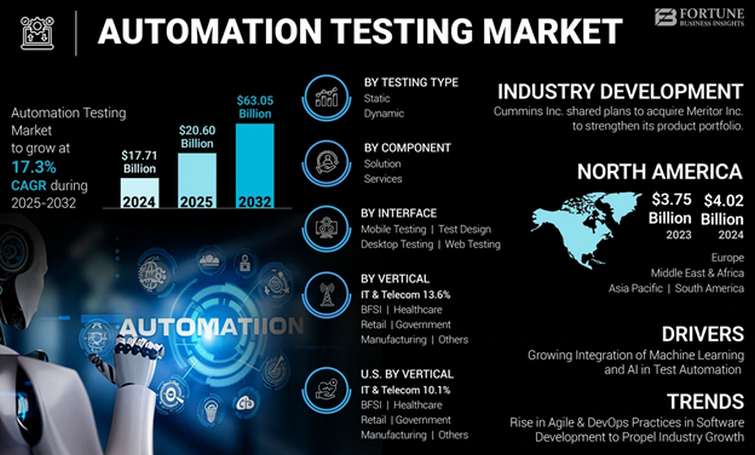
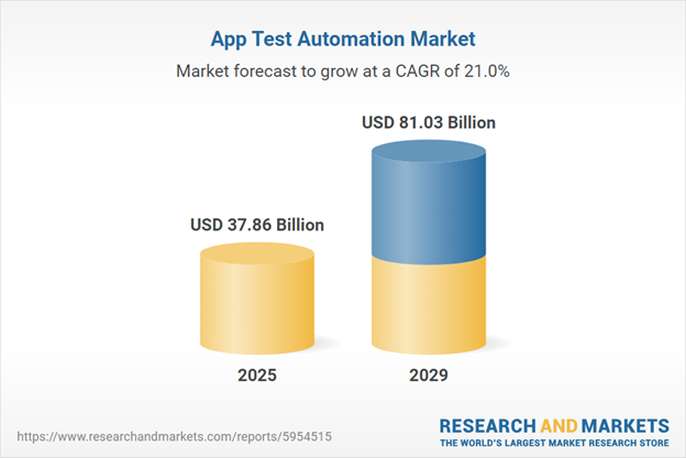
4. Test Automation: When and How a Startup Should Introduce It
A common mistake is either postponing automation “until later” or trying to automate everything at once.
Both strategies lead to frustration.
A rational approach for startups includes:
First, a stable process—then automation
Test automation is meaningless without basic discipline: a clear understanding of what is being released, how bugs are reported, and whether regression testing is in place.
Start with a narrow set of Smoke/Regression tests
– authentication and session management;
– basic operations (create/pay/submit);
– key business scenarios (core flows).
CI/CD integration
– automated tests run on every commit or before release;
– test results become a gate for deployment.
Gradual expansion of coverage
– instead of trying to cover everything immediately, tests are added in response to real incidents and new features.
- Quality Metrics as Part of Product Management
For a startup, it is critical to understand how quality impacts growth.
QA metrics should not exist in isolation—they must be part of the overall product dashboard.
Practically useful metrics include:
– Defect Leakage — the proportion of bugs that reach production;
– Time to Detect / Time to Fix — speed of issue discovery and resolution;
– Release Failure Rate — how many releases out of N are rolled back;
– User-facing Incidents — number of incidents affecting users;
– Support Load — customer support requests related to defects.
Metric correlation:
If rollbacks and incidents increase, this is not only a QA signal but also a product management warning—features may be released too aggressively or without considering technical constraints.
- The Role of QA in a Startup: From Tester to Product Partner
In small teams, QA cannot be “the person at the end of the conveyor belt.”
The role evolves over time:
– Early stage: basic feature validation, smoke tests, manual regression.
– Next stage: participation in requirements definition, scenario refinement, risk identification before coding begins.
– Mature stage: full involvement in the roadmap, influence on feature prioritization, work with metrics and product analytics.
The QA specialist serves as a bridge between development, business, and users, helping to balance speed and reliability.
Conclusion
Product quality in a startup is not a coincidence—it is the result of conscious decisions.
The earlier a team stops viewing QA as a “bottleneck” and starts treating it as a risk management tool, the higher the chances of sustainable growth.
A minimal QA framework, a risk-based approach, careful automation adoption, and integration of quality metrics into product analytics enable startups to:
– maintain development speed;
– reduce the likelihood of critical incidents;
– build trust with users and investors;
– create a predictable product growth model.
In a highly competitive environment, winners are not those who release faster at any cost, but those who know how to combine speed with reliability.
References
- McKinsey & Company. Quality in Digital-First Businesses. 2023.
- Google Cloud / DORA. Accelerate: State of DevOps Report. 2023–2024.
- IEEE Software. Risk-Based Testing in Agile and Lean Environments. 2022.
- ThoughtWorks Technology Radar. Test Automation and Continuous Delivery Practices. 2023.
- Atlassian. Metrics for High-Performing Software Teams. 2024.
Author: Kovalov Illia, Product Manager in the IT Industry
Trending Now

Top Tech News Today, March 25, 2026